Abstract
Despite the long standing importance of procreation, fertility rates have declined to unprecedented levels in many countries, raising concerns about the future demographic, economic, and social sustainability of populations. This global decline in fertility is particularly pronounced in certain regions, including Türkiye, where fertility rates have fallen rapidly in recent years. The aim of this article is to outline trends in total fertility rate (TFR) at the global and European levels and to raise awareness of the exceptionally steep fertility decline observed in Türkiye, where the TFR has fallen well below the replacement level and reached its lowest value on record. Data on TFRs were obtained from publicly available demographic databases and reports published by international organizations and national statistical agencies. Trends in fertility rates at the global, European, and national levels were reviewed and comparatively assessed to characterize the magnitude and pace of fertility decline in Türkiye. At the beginning of the millennium, Türkiye was the only country in Europe with TFR above the replacement level fertility. As in most countries worldwide, the TFR in Türkiye has declined over the past century. However, the pace of decline observed during the last quarter century has been particularly pronounced when compared with both global and European trends. Such a rapid fall in fertility brought the country to the levels comparable to those observed in many low-fertility societies. Such a trajectory suggests that factors beyond the global drivers of fertility transition may be contributing to the country’s demographic transformation. Türkiye has entered a period of unprecedented fertility decline. Whether this decline represents a temporary demographic fluctuation or the alarm bells of a potentially irreversible fertility crisis will depend largely on the policies implemented during the coming years. Given the accelerating pace of decline observed during the last decade, delaying effective action may substantially reduce the likelihood of reversing current demographic trends in the future.
Keywords: Reproductive techniques, assisted, fertility decline, Türkiye, replacement fertility
Introduction
Procreation is a fundamental prerequisite for the continuity of human societies and, more broadly, of all living species. Beyond its biological significance, reproduction has long been recognized as a central human aspiration and social value. In modern psychology, the desire to establish a family and have children is often associated with the third level of Maslow’s hierarchy of needs, encompassing love, belonging, and interpersonal relationships.
Despite the long standing importance of procreation, fertility rates have declined to unprecedented levels in many countries, raising concerns about the future demographic, economic, and social sustainability of populations. This global decline in fertility is particularly pronounced in certain regions, including Türkiye, where fertility rates have fallen rapidly in recent years. Persistent changes in fertility have important demographic, socioeconomic, and public health implications. Sustained fertility below replacement level can alter population size and age structure, with potential consequences for the working-age population, dependency ratios, healthcare systems, and social services. These implications have made fertility decline an increasingly important issue for both national and international policymakers.
To monitor the demographic trends, several indicators have been developed to assess the reproductive potential of populations, including fecundity, fecundability, and total fertility rate (TFR). Among these measures, TFR-defined as the average number of children a woman is expected to have over her lifetime- is the most widely used indicator for evaluating fertility patterns. It is also used to assess whether fertility is above or below the level required for long-term population replacement. The persistent decline in TFR observed across all regions of the world during the past century has elevated fertility trends to a major concern at both national and international levels.
The aim of this article is to outline trends in TFR at the global and European levels and to raise awareness of the exceptionally steep fertility decline observed in Türkiye, where the TFR has fallen well below the replacement level and reached its lowest value on record. Furthermore, this article seeks to stimulate discussion among policymakers, healthcare professionals and other stakeholders to contribute to the development of evidence-based strategies and a roadmap for the future.
Global overview
In order to sustain the socioeconomic balance of the society, any country is expected to have a TFR which can be able at least maintain its population. Replacement-level fertility (RF) which is defined as the TFR at which a population exactly replaces itself from one generation to the next, without migration is the demographic indicator used to assess this capacity. Although the threshold for RF has been defined as 2.1 by the United Nations population division (), it cannot be accepted as a universal value since RF may vary across populations depending on mortality patterns, life expectancy, and sex ratios at birth. For instance, it has been estimated at approximately 2.94 in East Africa and may reach as high as 3.4 in some least-developed countries, such as Sierra Leone (). Since the mid-70s, there is a steady decline in global TFR from 4.08 in 1975 to 2.32 in 2021 gradually approaching the RF threshold. In 2021, the average TFR in more developed regions was approximately 1.52, well below the replacement level, whereas less developed regions remained close to replacement fertility with a TFR of 2.12. Although fertility rates remain highest in the least-developed countries, they have also fallen substantially, declining from approximately 6.70 children per woman in 1970 to 3.97 in 2021. The proportion of countries with fertility levels below replacement has increased dramatically over time. While 5% of the countries were below RF in 1950, it is estimated that 93% of all countries will have a TFR below replacement level of 2.1 by 2100 (). As of 2026, only six countries worldwide have a TFR exceeding five. At one end of the fertility spectrum are several sub-Saharan countries, Chad ranking highest globally at 5.84 children per woman, followed by Somalia (5.81) and the Democratic Republic of the Congo (5.80). At the opposite end of the spectrum is South Korea, with a TFR below 0.8 () (). The magnitude of the demographic transition of these latter countries is particularly striking when viewed from a historical perspective. In the mid-twentieth century, both China and South Korea were characterized by very high fertility levels, with TFRs exceeding six. Within a few decades, however, these countries experienced some of the most rapid fertility declines ever recorded. The recent pace of fertility decline in Türkiye
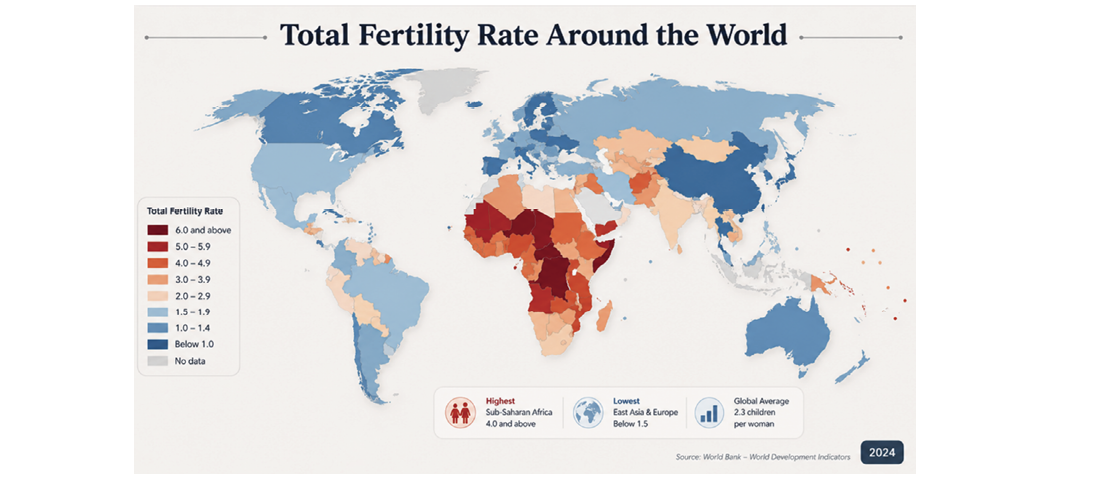
Global distribution of total fertility rates by country. Adapted from World Bank Open Data 2024 (World Development Indicators)
resembles the demographic trajectories previously observed in several East Asian countries, although the underlying drivers appear to differ. Current demographic projections suggest that TFR will continue to decline below the replacement level across all world regions, with the global trend converging towards a sub-replacement TFR of 1.66-1.75 by 2100. At such fertility levels, populations are expected to enter a prolonged period of decline over subsequent decades, rather than experiencing an abrupt demographic contraction ().
Despite the substantial decline in global TFR, the world’s population continues to grow while the decline in TFR just slowed the pace of population growth rather than reversing it. An examination of the time required for the global population to increase by successive increments of one billion illustrates the unprecedented pace of population growth over the past two centuries. It was not until 1804 that the world human population reached its first billion. The second billion was added 123 years later, whereas the third billion was reached only 33 years thereafter in 1960. Subsequently, each additional billion people was added within approximately 12-15 years, reflecting the rapid acceleration. Owing to declining fertility rates worldwide, the intervals required to add each successive billion people are projected to lengthen progressively, reaching approximately 13-25 years during the remainder of the twenty-first century.
It is noteworthy that long-term predictions regarding global population growth have often proven inaccurate. In the late eighteenth century, Thomas Malthus argued that population growth would tend to outpace food production, as population increases geometrically whereas food supply expands only arithmetically. He therefore anticipated that resource constraints would eventually lead to famine, disease, and increased mortality. More than a century later, neo-Malthusian thinkers such as Paul Ehrlich renewed concerns about overpopulation. In his influential 1968 book The Population Bomb, Ehrlich predicted widespread famine and severe societal disruption resulting from rapid population growth during the latter half of the twentieth century. However, many of these predictions failed largely because of major advances in agriculture, technology, public health, and economic development. With the current population of nearly 8.3 billion, current estimates suggest that the global population is likely to reach approximately 10-10.5 billion by the end of the twenty-first century and may subsequently stabilize or even decline, although substantial uncertainty remains regarding future fertility trends ().
A wide range of factors have contributed to the global decline in fertility. Government policies, such as China’s former one-child policy and increasing use of contraception methods; socioeconomic factors including increased educational attainment, difficulties in finding a suitable partner who meets their expectations, delayed marriage and childbearing, developmental idealism, changing preferences regarding family size, rising costs of raising children, urbanization have played major roles in shaping fertility trends worldwide.
Beyond these social and economic determinants, growing attention has been directed toward environmental and biological factors that may affect human fecundity. Exposure to reproductive toxicants, including air pollutants, endocrine-disrupting chemicals, micro- and nanoplastics, and certain forms of environmental radiation, has been associated with adverse reproductive outcomes. Furthermore, climate change and lifestyle-related factors such as poor dietary habits, obesity, physical inactivity, smoking, and alcohol consumption may also contribute to impaired reproductive health and reduced fertility potential. The combined effects of these factors may influence both biological fecundity and, indirectly, population-level fertility rates.
Assisted reproductive technologies (ART) occupy a unique position in the context of declining fertility. On one hand, ART represents an essential medical intervention that enables many infertile individuals and couples to achieve parenthood, thereby partially mitigating the demographic consequences of reduced natural fertility. On the other hand, the expanding availability and success of ART may divert attention from the underlying causes of declining fecundity. Reliance on ART could inadvertently reduce the urgency of addressing the relevant factors that may impair reproductive health and other potentially modifiable risk factors causing a delay in taking the necessary measures thereby limiting opportunities to preserve reproductive health at the population level (). As an example, since social oocyte cryopreservation has emerged as a vital fertility preservation option for women wishing to postpone childbearing, some technology companies have offered coverage for social egg freezing for their employees as part of their fertility benefits package, generating public and academic debate (). Although oocyte cryopreservation offers an opportunity to extend reproductive potential, successful parenthood ultimately depends on subsequent ART treatment and is basically influenced by factors such as the woman’s age at the time of oocyte freezing and the number and quality of stored oocytes. Consequently, reliance on cryopreserved oocytes involves future physical, psychological, and financial burdens associated with ART, while no guarantee of a live birth can be provided. Furthermore, unrealistic expectations regarding the effectiveness of fertility preservation may lead some individuals to overestimate their future reproductive potential and missing the chance of a natural pregnancy. This topic has become the subject of ongoing debate as it is viewed as a pressure to delay childbearing for career and interfering reproductive autonomy.
Fertility trends in Türkiye compared with Europe
Situated at the crossroads of Europe and Asia, Türkiye occupies a unique geographical and sociocultural position between the two continents. With a population of nearly 86 million (), it is the second most populous country in the continent and among the twenty most populous countries worldwide. Relying on its young population for decades now the country struggles in an alarming position because of the sharp TFR decline for the last two decades. Given its large population size and strategic position, the demographic trajectory of Türkiye has implications that extend beyond its national borders and contribute to broader discussions in Europe and globally.
As the RF value represents the threshold required for any country to successfully replace its population from one generation to the next one, determining the country-specific RF is an essential first step in assessing the demographic implications of declining fertility in Türkiye. Even though most of the developed countries in the world have RF values within 0.1 of 2.1, assuming this value to be universally applicable may lead the policy makers to underestimate the national TFR decline and may result in catastrophic long-term results. RF varies among populations, primarily as a function of mortality conditions. Basically RF is calculated by the formula: RF≈(1+SRB)/p(AM) where SRB stands for “sex ratio at birth (male to female ratio)” and p(AM) is the probability of surviving to the mean age of the childbearing ().
Based on the most recent female life tables (2021-2023) published by the Turkish Statistical Institute (TurkStat), the probability that a female newborn survives to the mean age of childbearing can be estimated as p(AM)=0.988 (). Therefore using the TurkStat data on sex ratio at birth of 1.05 male births per female birth, RF rate for Türkiye can be approximated as:
RF≈(1+1.05)/0.988=2.07 children per woman which is remarkably close to the conventional replacement threshold of 2.1 children per woman widely adopted by the United Nations.
The estimated RF rate of 2.07 children per woman should nevertheless be interpreted with caution. This calculation relies on the accuracy of age-specific mortality estimates reported in national life tables and assumes that the probability of surviving to the mean age of childbearing is approximately 98.8%. Although this estimate is derived from official Turkish life tables, several indicators suggest that mortality conditions in Türkiye may remain less favorable than those observed in many European countries. For example, infant mortality rates are substantially higher than the European Union average (about three-fold) and nearly six folds more compared to Scandinavian countries (), road traffic mortality is among the highest in Europe, 3-4 times higher than the safest countries in Europe (), and the country has experienced an exceptionally large burden of earthquake-related mortality with 85% of all earthquake deaths in Europe during the last 125 years having been recorded in Türkiye (). While these factors do not directly invalidate the life-table estimates, they underscore the importance of vigilance when deriving demographic indicators such as RF.
Fertility decline in Türkiye
At the turn of the millennium, Türkiye was reported to be the only European country with a TFR above the RF level (). In line with the global trend, Türkiye has experienced a sustained decline in fertility over the past century. Nevertheless, the decline during the last quarter century has been particularly marked, especially in comparison with broader European and global fertility trends. This accelerated reduction has brought Türkiye’s fertility rate closer to those observed in many low-fertility societies. The distinct pace of this demographic shift suggests that, alongside the global determinants of fertility transition, additional country-specific factors may be influencing Türkiye’s changing fertility patterns.
According to data from TurkStat, the TFR decreased from 2.38 children per woman in 2001 to approximately 1.42 in 2025 (), corresponding to an overall decline of about 40% within less than 25 years. This decline translates into an average annual reduction of approximately 1.7% with an even steeper decrease observed during the most recent decade with an annual decrease of nearly 3.5% ().
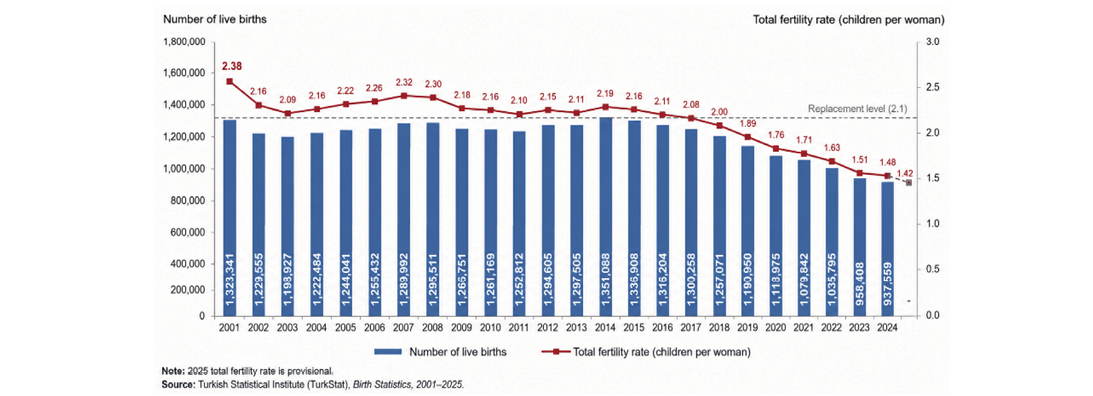
Trends in the number of live births and total fertility rate in Türkiye, 2001-2024 (prepared by the author using data from the Turkish Statistical Institute, birth statistics, 2001-2025)
The magnitude and speed of this decline are particularly noteworthy when viewed in an international context. Countries such as China, South Korea, and Singapore are often cited as examples of rapid fertility transition; however, the recent decline observed in Türkiye has occurred over a remarkably short period. Although the underlying determinants differ across countries, the Turkish experience illustrates how fertility can fall from above-replacement levels to very low levels within a single generation ().
Over the same period, the average TFR in Europe remained relatively stable, fluctuating around 1.5 children per woman, although substantial differences were observed between individual countries (). While several European countries experienced declining fertility, others demonstrated modest but noteworthy increases. Türkiye recorded the largest decline in TFR in Europe between 2001 and 2021, whereas Czechia (+59%), Romania (+43%), and Slovakia (+36%) experienced substantial increases during the same period (-). According to the most recent European data, Bulgaria recorded the highest fertility rate (1.81), whereas Malta had the lowest (1.06) (). Consequently, unlike many Central and Eastern European countries, where fertility has shown signs of recovery since the early 2000s, Türkiye stands out as the leading country in Europe that has experienced the most pronounced fertility decline during the first quarter of the twenty-first century.
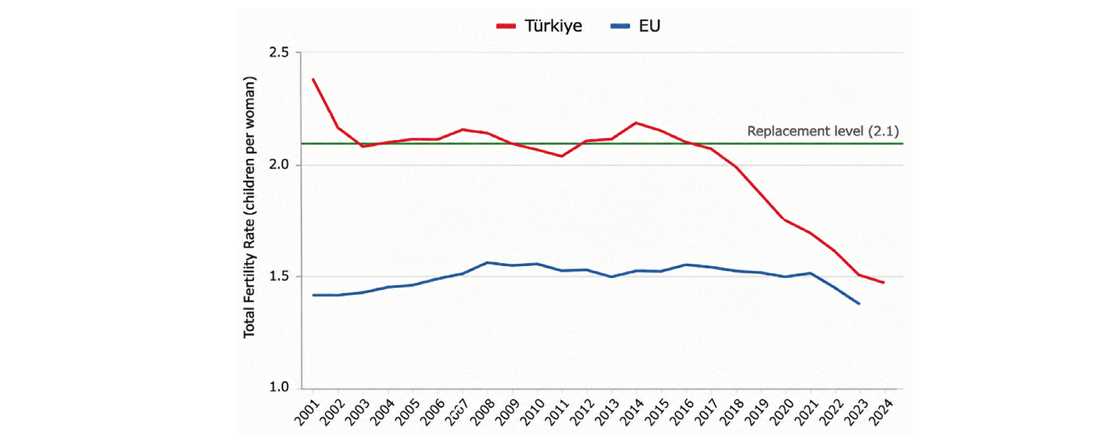
Trends in total fertility rate in Türkiye and the European Union between 2001-2024 [prepared by the author using data from the Turkish Statistical Institute, birth statistics, 2001-2024 and Eurostat, Fertility Indicators (dataset: demo_find, EU-27)]
Türkiye’s remarkable transition from having the highest TFR in Europe at the beginning of the twenty-first century to experiencing the continent’s most rapid fertility decline necessitates a meticulous analysis. Although this decline may partially be attributable to global phenomena that have affected fertility patterns worldwide, including the coronavirus disease 2019 pandemic, such factors alone are unlikely to explain the magnitude and speed of this change. In addition to the universal determinants of fertility decline, such as urbanization, environmental influences, delayed childbearing, and changing family preferences, additional country-specific factors are likely to have contributed to this exceptional trend. Robust evidence identifying and quantitatively ranking the specific determinants of the exceptionally rapid recent fertility decline in Türkiye remains limited. Therefore, some of the country-specific interpretations presented below should be considered hypothetical analysis rather than established causal explanations.
An earlier study of fertility decline in Türkiye during the twentieth century found that declining fertility was associated with continuing modernization and the concomitant expansion of female education, as well as socioeconomic development that influenced marriage patterns, including the mean age at marriage and the proportion of women married (the marital rate) ().
One of the first questions to address is whether the postponement of parenthood has been the major driver of this steep fertility decline. Social and economic conditions of contemporary lifestyle forces the women of the 21st century to postpone their plans for having children to later reproductive ages when natural fecundity progressively declines. Higher educational attainment, career aspirations, difficulties in finding a suitable partner who meets their expectations, changing perceptions of the ideal family size, and developmental idealism have all been identified as important determinants of delayed childbearing in both developed and developing countries (). In Türkiye, the mean age of women at first birth increased by 1.8 years within a single decade, reaching 27.3 years in 2024 () (). This trend suggests that postponement of parenthood may have contributed to declining fertility levels. However, the magnitude of the increase appears relatively modest when considered against the exceptionally rapid decline in the Turkish TFR. The continued decline in completed fertility suggests that additional factors are operating. Indeed delayed parenthood may contribute to temporary reductions in period fertility rates through a tempo effect but it does not necessarily imply fewer children overall as the women can theoretically “catch up” and have the same number of children at later ages. Hence, an increase in the age at first birth does not exactly mean a permanent reduction in family size. If postponement of childbearing were the sole explanation, a substantial recuperation of fertility at older ages would be expected.
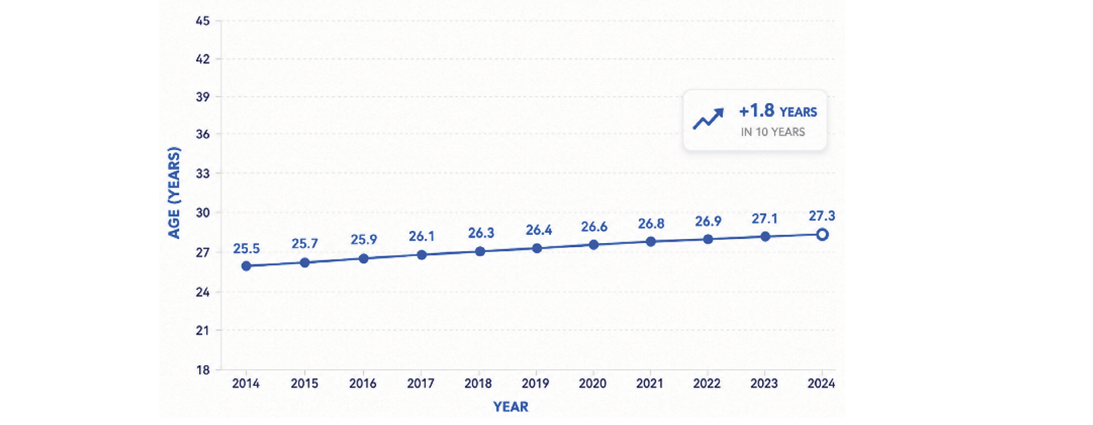
Mean age of women at first birth in Türkiye, 2014-2024
For comparison, the mean age of women at first birth in Europe was 29.9 years in 2024 (). In contrast, the corresponding figure in Türkiye was 27.3 years, indicating that Turkish women become mothers, on average, 2.6 years earlier than the European mean. Indeed, Türkiye ranks among the European countries with the youngest age at first birth, alongside Bulgaria and Romania (). Several European examples further illustrate this point: In France, where the TFR remains among the highest in Europe, the mean age at first birth is 29.3 years. In Czechia, where fertility increased substantially between 2001 and 2021, the corresponding age reached 29.9 years. Similarly, in neighboring Greece, where women have their first child at an average age of 31.2 years-almost four years later than in Türkiye-fertility levels have remained comparatively stable and even increased modestly over the same years (,). Taken together, these findings indicate that changes in the timing of childbearing are insufficient to explain the magnitude of the fertility decline observed in Türkiye, additional factors must be operating to account for the exceptional transformation observed during the past two decades which appears to reflect forgone fertility rather than postponed fertility.
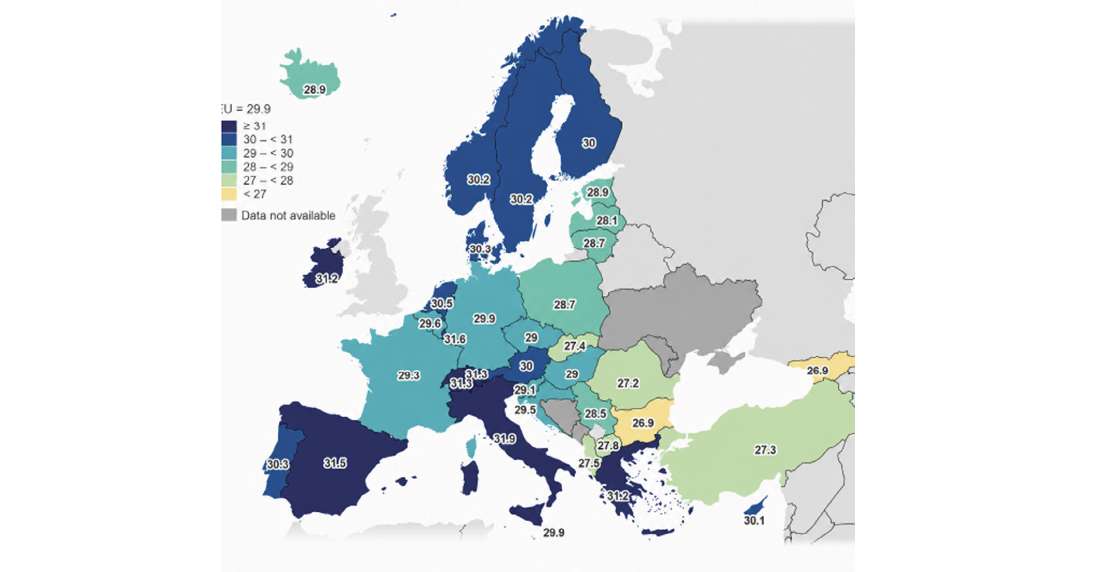
Mean age of women at first birth across Europe in 2024, adapted from Eurostat
Worsening economic conditions
Among the probable drivers of fertility decline in Türkiye, economic conditions deserve particular attention. Economic insecurity appears to be a major societal concern. In a large-scale national survey, economic problems were identified as the issue of greatest concern among Turkish citizens (). Similarly, an international survey data showed that approximately 58% of Turkish respondents identified inflation and rising living costs as major concerns, one of the highest levels recorded among participating countries. In the same survey, 85% of respondents considered the economy to be the country’s most important problem, while the cost of living and poverty were the two most frequently cited specific concerns by 31% and 17% of the participants respectively ().
Several indicators may be used to evaluate the economic well-being of citizens and to compare living standards across countries. Among these, minimum wage levels provide a simple and readily understandable proxy measure of the purchasing power available to low-income workers and young adults who are often at the stage of family formation (). Although minimum wages do not capture all dimensions of economic well-being, substantial differences in minimum wage levels across European countries may offer useful insights into the economic environment in which reproductive decisions are made ().
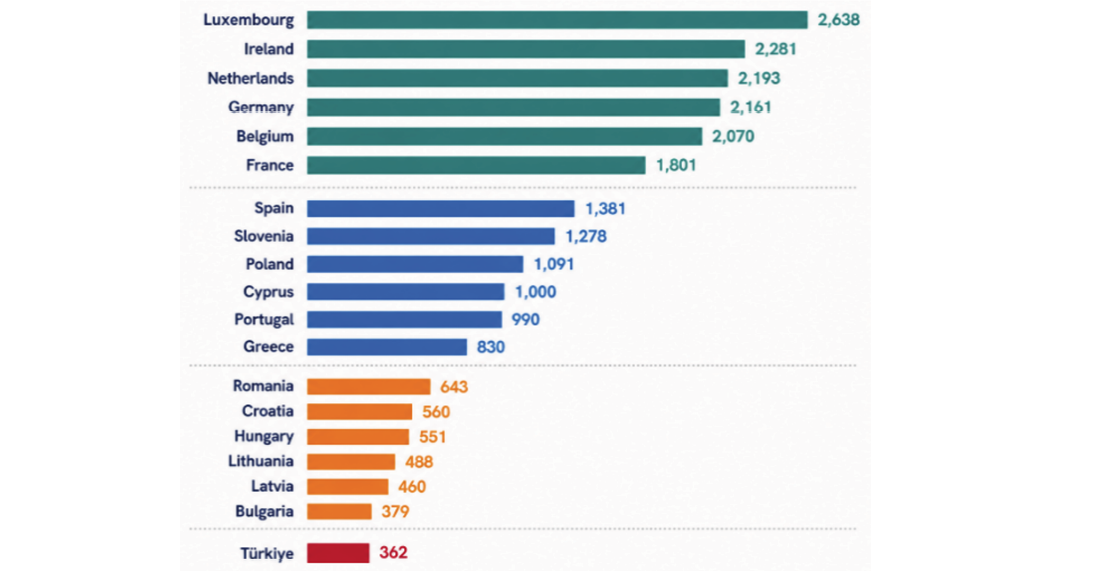
Monthly gross minimum wages across selected European countries in 2025 (€) adapted from Eurofound (24)
Combined with some of the highest inflation rates () in Europe and rapidly increasing housing costs, Türkiye’s very low wage levels may have created substantial economic barriers to family formation (). Over the last ten years, inflation has increased dramatically, especially after 2021 (). Under such conditions, many couples may choose to postpone parenthood until achieving greater financial security, while others may ultimately decide to have fewer children than originally intended or to remain childless. The potential role of economic hardship is particularly relevant in Türkiye because a large proportion of the workforce earns wages close to the statutory minimum wage. Minimum wage policies have a substantial impact on the Turkish workforce, with the 2025 minimum wage increase reported to affect approximately nine million workers (,).
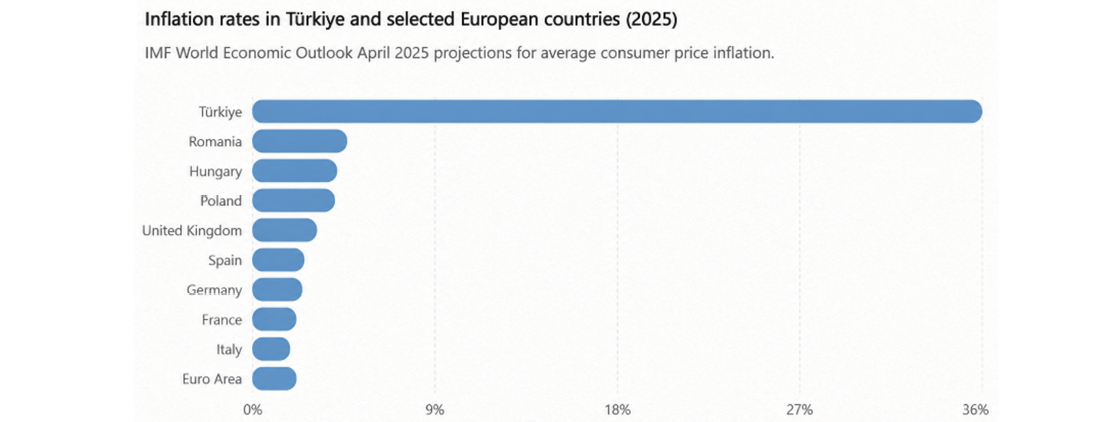
Projected average consumer price inflation rates in Türkiye and selected European countries for 2025, based on the IMF World Economic Outlook Database (April 2025) (25)
Consequently, Türkiye simultaneously ranks among the lowest countries in Europe in terms of minimum wages and among the highest in terms of inflation. While the nominal minimum wage increased substantially during the last decade, wage growth often lagged behind housing and consumer price inflation, resulting in a decline in real purchasing power for many households. Although direct causal relationships are difficult to establish, the timing of Türkiye’s accelerated fertility decline coincides with a period characterized by persistent inflation, declining purchasing power, and increasing housing costs. This temporal association suggests that economic factors may have contributed substantially to the country’s recent fertility trends.
In addition to the steady rise in living expenses, the costs of raising children -education expenses in particular- have also increased substantially in Türkiye. According to data from the Ministry of National Education, the proportion of students enrolled in private schools increased approximately fourfold over the last two decades (). This trend may partly reflect parental concerns regarding the perceived quality of academic and social education provided by public schools. As a consequence, an increasing number of families may feel compelled to allocate a larger share of household income to education-related expenses. The rising financial burden of childrearing, combined with broader economic challenges such as inflation, housing costs, and declining purchasing power, may influence reproductive decision-making by increasing the perceived cost of having children.
As economic uncertainty has consistently been associated with delayed marriage, postponed childbearing, and reduced fertility intentions across European populations (), these findings suggest that economic pressures may represent an important contextual factor contributing to delayed family formation and declining fertility intentions in Türkiye. Previous research from Türkiye has also identified socioeconomic and demographic characteristics, including income and human capital, as factors associated with fertility patterns in the country (). However the relative contribution of these factors to the recent acceleration in fertility decline remains insufficiently established. Such a relationship is also consistent with Maslow’s hierarchy of needs, which proposes that individuals prioritize the fulfillment of basic physiological and security needs before pursuing higher-order life goals, including family expansion and childbearing.
Marriage and divorce trends
Although Türkiye is a secular country governed by a civil legal system independent of religious law, marriage remains closely linked to family formation because of prevailing cultural norms. Childbearing outside marriage is relatively uncommon and continues to be socially stigmatized in many parts of the country, particularly in smaller cities and rural areas. Thus, the timing of first births may reasonably be expected to be closely associated with the timing of marriage. Marriage also has particular relevance in the context of assisted reproduction. Under current Turkish legislation, access to ART services is restricted to legally married heterosexual couples (). Therefore, marriage and divorce trends may serve as useful indirect indicators when examining fertility dynamics in Türkiye. Analysis of family formation indicators over the last two decades reveals substantial changes. During this period, the crude marriage rate declined by approximately 30%, whereas the crude divorce rate increased by approximately 30%. At the same time, the divorce-to-marriage ratio nearly doubled () (). These findings suggest a gradual weakening of traditional family formation patterns and may partly contribute to the observed decline in fertility. Given the strong association between marriage and childbearing in Türkiye, even modest reductions in marriage rates may translate into disproportionately large declines in fertility ().
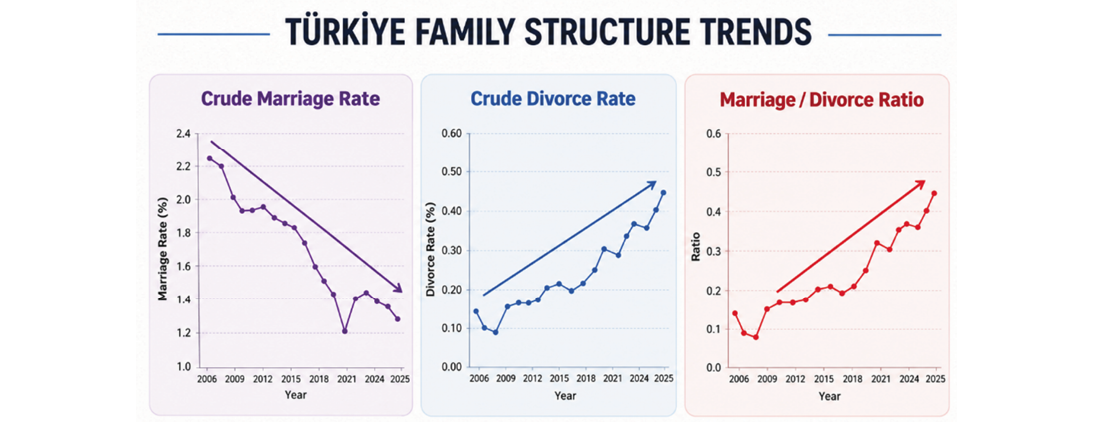
Trends in crude marriage rates, crude divorce rates, and the divorce-to-marriage rate ratio in Türkiye, 2006-2025. Source: Turkish Statistical Institute (TurkStat) (32)
Governmental fertility support policies
Evidence from surveys conducted in different parts of the world suggest that the reasons underlying fertility decline may differ substantially across countries and regions. For example, in the United States among adults younger than 50 years who say that they were unlikely to have children, top three reasons were “they just don’t want to (57%)”, “they want to focus on other things (44%)” and “concerns about the state of the world (38%)” (). In contrast, studies from Europe indicate that economic and structural barriers are more commonly cited as obstacles to achieving desired fertility than voluntary childlessness (). To reduce the economic burden and mitigate fertility decline and facilitate family formation, many governments have implemented family-friendly policies, including cash supports, tax breaks for families, longer paid parental leave, subsidized childcare services, flexible working arrangements, and measures designed to improve work-life balance.
The extent of public support for families varies considerably across Europe. According to European social protection expenditure data, France allocates the highest public resources to child and family benefits spending levels approximately 7.5 times higher than Türkiye (). Furthermore, the average level of public expenditure on family benefits across the European Union is estimated to be approximately 5 times greater than that of Türkiye (). These findings suggest that the relatively limited level of governmental support available to families in Türkiye may represent an additional factor contributing to the economic challenges associated with childrearing. In combination with high inflation, rising housing costs, and declining purchasing power, lower public investment in family benefits may further discourage family formation and reduce fertility intentions among young adults and couples.
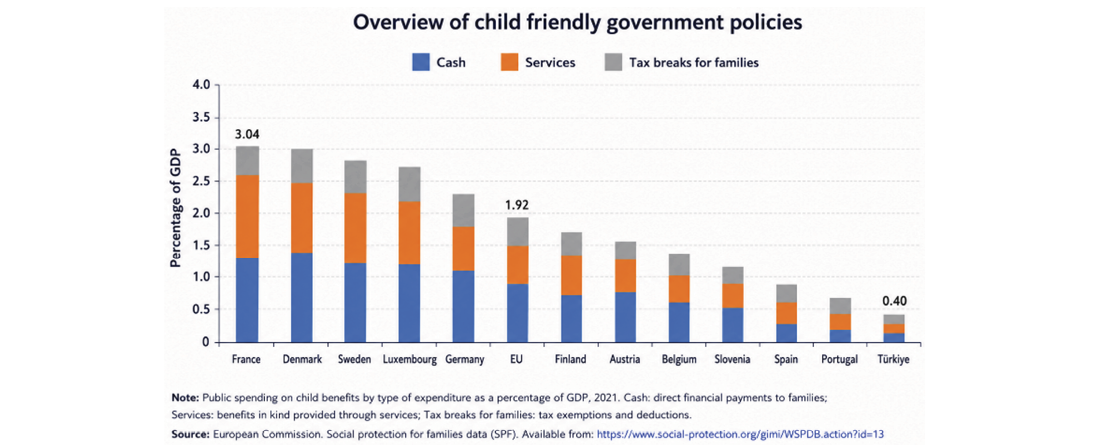
Public spending on family benefits by type of expenditure (% of gross domestic product), 2021
Role of medically assisted reproduction (MAR) at the global scale
Infertility represents an increasingly important component of contemporary fertility dynamics. Although declining TFRs are primarily driven by socioeconomic and behavioral factors, impaired fecundity may also contribute to deepening of the problem. Consequently, medically assisted reproduction (MAR) occupies a unique position both in the context of fertility decline and among the potential strategies aimed at mitigating its demographic consequences.
Growing concerns regarding reproductive health have been highlighted by reports of declining semen quality worldwide. A systematic review and meta-analysis estimated a 51% reduction in average sperm concentration over a 46-year period (). Furthermore, approximately one in six individuals worldwide experiences infertility at some point during their reproductive lifetime, while the prevalence of infertility among women aged 20-44 years is estimated to be between 8% and 12% (,). Affecting an estimated 48 million couples and 186 million individuals globally, infertility has become a major public health concern and may influence fertility patterns at the population level (,). To address this challenge, MAR-particularly ART-has been increasingly utilized not only for the treatment of infertility but also for fertility preservation and family formation. Since the birth of the first ART-conceived child in 1978, the use of ART has expanded exponentially. It is estimated that more than 13 million children have been born worldwide through ART, with Europe accounting for the largest share of ART-conceived births, followed by Asia and North America. Currently, an ART-conceived infant is born approximately every 35 seconds worldwide, representing around 0.5% of all live births (,). Despite these remarkable achievements, a substantial gap remains between the current utilization of ART and the estimated global need for infertility care. Considering that the global need for ART is 10-fold higher (), the potential contribution of ART would be 10 times more if access to treatment expands and existing unmet needs are addressed. In an era of declining fertility rates, even modest increases in ART-conceived births may translate into a meaningful contribution to the number of annual births in many countries.
Accessibility of ART in Türkiye
According to the Regulation on ART Practices in Türkiye, all forms of third party reproduction are strictly banned and access to ART is restricted to legally married heterosexual couples making Türkiye one of the more restrictive countries in Europe regarding eligibility for fertility treatment (). To evaluate fertility treatment policies across Europe, Fertility Europe and the European Parliamentary Forum for Sexual and Reproductive Rights developed the European Atlas of Fertility Treatment Policies 2024 (). This comparative assessment ranks countries on access to equal, safe and efficient fertility treatments according to three broad domains: legal access to fertility care, public funding and reimbursement mechanisms, and patient-centered aspects of treatment provision. Among the 49 countries included in the Atlas, Türkiye ranked 35th overall. When countries were categorized into six performance groups ranging from “excellent” to “exceptionally poor” based on the level of excellence for ART policy, Türkiye was placed in the lower tier of the fifth group, classified as having a very poor fertility treatment policy environment. This ranking reflects limitations in both treatment accessibility and public support mechanisms. One of the benchmark criteria for achieving the highest ranking in the Atlas is the nationwide reimbursement of up to four intrauterine insemination (IUI) cycles and six IVF/ICSI cycles. In contrast, public funding for ART in Türkiye is substantially more restrictive, with reimbursement subject to specific medical, legal, and administrative eligibility criteria limiting access to treatment compared with some European countries.
Public funding and reimbursement of ART in Türkiye
Although ART is partially reimbursed by the public healthcare system in Türkiye, eligibility criteria are relatively restrictive compared with those in many European countries. According to the Social Insurance and General Health Insurance Law and the Health Implementation Communiqué, reimbursement is available only to couples fulfilling specific medical, legal, and insurance-related requirements (,). To qualify for publicly funded treatment, couples must be legally married for at least three years without a living child from their current marriage, the female partner must be between 23 and 39 years of age, and at least one partner must have been covered by the national social security system for a minimum of five years with at least 900 contribution days. In addition, except in cases of primary ovarian insufficiency or azoospermia, failure to achieve pregnancy despite previous infertility treatments during the preceding three years must be documented by an authorized medical board. Eligible couples may receive reimbursement for up to three cycles of IUI, where medically appropriate, followed by up to three ART cycles. Patients are required to contribute 30%, 25%, and 20% of the treatment costs for the first, second, and third ART cycles respectively. Reimbursement applies to initiated treatment cycles regardless of whether they are completed or cancelled. The public funding package also includes frozen embryo transfer cycles, reimbursement of approximately 70% of medication costs during eligible treatment cycles, cryopreservation of surplus embryos, and up to three preimplantation genetic testing for monogenic disorders cycles when indicated. In contrast, elective (non-medical) oocyte or embryo cryopreservation, preimplantation genetic testing for aneuploidy, and IVF add-on interventions are not covered by the national reimbursement scheme.
Although the existence of a public reimbursement mechanism represents an important strength of the Turkish healthcare system, the combination of eligibility restrictions, co-payment requirements, and limited coverage may create financial barriers for many couples and may also reduce the potential contribution of MAR to national birth rates.
Availability of ART in Türkiye
The availability of ART within a country is commonly assessed using the number of treatment cycles performed per million inhabitants annually. The European Society of Human Reproduction and Embryology (ESHRE) previously proposed a benchmark of 1,500 cycles per million population per year as an estimate of the minimum population need for ART services (). Although this threshold was developed more than two decades ago and may warrant re-evaluation in light of contemporary demographic and technological developments, it remains the most widely cited reference point for international comparisons. Recent ESHRE reports demonstrate a continued increase in ART utilization across Europe during 2021. Belgium, Czechia, Denmark, Estonia, Greece, and Iceland remain among the countries where ART contributes to more than 5% of all live births. In terms of treatment availability, Greece, Czechia, and Estonia currently rank among the European leaders, exceeding 2,900 ART cycles per million inhabitants annually, followed by Denmark, Belgium, and Spain (). Assessment of ART availability in Türkiye is complicated by the absence of a comprehensive national registry that is publicly accessible to researchers, healthcare professionals, and policymakers. Furthermore, the contribution of Turkish data to international registries has been inconsistent.
During the first seven years of the European IVF Monitoring Consortium registry, Türkiye did not submit national ART data (). Türkiye first contributed IVF data pertaining to 2004 to both the European and ICMART world registries and continued reporting to the European registry for four additional consecutive years (2005-2008) (). However, reporting ceased again for approximately a decade before resuming through a collaborative effort involving three national IVF societies. Despite this progress, the most recent submissions have represented fewer than 20% of all IVF clinics operating in the country (50), limiting the ability of international registries to accurately reflect national ART activity (). As a consequence, the current national ART utilization rate in Türkiye cannot be reliably determined from the available registry data. Based on historical registry reports, 43,928 ART cycles were reported from Türkiye in 2008, corresponding to approximately 614 cycles per million inhabitants, calculated using the national population of 71,517,100 in the same year. This historical rate was substantially below the ESHRE benchmark of 1,500 cycles per million inhabitants annually and the levels reported by leading European countries. Although this figure cannot be considered representative of current ART availability, it provides a historical indication of the potential gap in treatment utilization. Even allowing for uncertainty arising from incomplete and inconsistent registry reporting, the available evidence raises concerns that ART availability in Türkiye may lag behind that of many European nations. Furthermore, these limitations highlight the need for a comprehensive national ART registry to accurately monitor treatment utilization and identify potential gaps in access to care.
Table 1. Contribution of Türkiye to the ESHRE European IVF-monitoring (EIM) registry: reporting coverage and ART activity, 1997-2020
Year | ART clinics in Türkiye | Cycles reported from Türkiye | Total ART cycles | Turkish contribution (%) | European Rank |
|---|---|---|---|---|---|
Reporting/total (%) | |||||
1997-2003 | No data submission from Türkiye | - | - | - | - |
2004 | 4/78 (5%) | 3,575 | 367,066 | 0.97 | NA |
2005 | 61/93 (66%) | 28,417 | 418,111 | 6.80 | 6 |
2006 | 77/77 (100%) | 37,468 | 458,759 | 8.17 | 6 |
2007 | 92/92 (100%) | 35,386 | 493,184 | 7.18 | 6 |
2008 | 107/107 (100%) | 43,928 | 531,260 | 8.27 | 5 |
2009-2018 | No data submission from Türkiye | - | - | - | - |
2019 | 26/167 (16%) | 33,098 | 1,077,813 | 3.10 | NA |
2020 | 14/167 (8%) | 10,267 | 923,318 | 1.10 | NA |
ART: Assisted reproductive technology, IVF: In vitro fertilization, NA: Not applicable, ESHRE: European Society of Human Reproduction and Embryology Note: No national ART data from Türkiye were submitted to the ESHRE EIM Consortium during 1997-2003 and 2009-2018 Percent contribution was calculated as the proportion of cycles reported from Türkiye among all cycles reported to the ESHRE EIM database in the corresponding year Source: ESHRE European IVF-Monitoring (EIM) Consortium
Although MAR alone cannot reverse population-level fertility decline, improving access to ART may represent an important opportunity to mitigate the demographic impact of declining fertility and reduce the gap between intended and achieved fertility in Türkiye. Notably, countries with the highest ART availability in Europe are also among those where ART contributes the greatest proportion of annual births, suggesting that access to fertility treatment can also have a measurable demographic impact at the population level.
Can Türkiye reverse its fertility decline? Policy implications and future perspectives
An optimistic interpretation of the current fertility trend in Türkiye could be that the country is merely experiencing a delayed but accelerated version of the fertility transition that many European nations underwent during the twentieth century and there is nothing alarming. However, such an explanation alone appears insufficient to account for the magnitude and speed of the recent decline. If fertility continues to decrease at a pace similar to that observed during the last decade, Türkiye may reach fertility levels comparable to those currently observed in the world’s lowest-fertility societies. As a possible scenario, if the current trend of -3.5% annual decrease for TFR continues in Türkiye it can easily be estimated that after another decade Türkiye’s TFR may drop to the level of less than “one” which will apparently be a “fertility collapse” rather than a transition. Such a situation would have profound demographic, economic, and social consequences.
The evidence presented in this review suggests that the fertility decline in Türkiye cannot be attributed to a single factor. Rather, it appears to result from the interaction of economic pressures-possibly as a major factor-, changing family formation patterns, delayed childbearing, limited public support for families, and restricted access to fertility treatment. Consequently, any effective response must be multifaceted and respect both reproductive autonomy and socioeconomic realities.
Among the potential interventions, improving economic conditions should be regarded as the highest priority. Persistent inflation, declining purchasing power, housing affordability challenges, and increasing childrearing costs may discourage family formation and reduce fertility intentions. Policies aimed at strengthening economic security among young adults and families are therefore likely to be central to any long-term demographic strategy.
Additional measures should include family-friendly policies that facilitate earlier family formation and work-life balance, such as expanded paid parental leave, affordable childcare services, flexible employment arrangements, and targeted financial support for families with children. Ineffective strategies like moral pressure, one-time financial bonus or just blaming cultural change and related factors alone will be no more than wasting precious time.
From the perspective of reproductive medicine, increasing awareness of age-related fertility decline represents only one component of the solution. Equally or even more important is improving access to infertility care. Expansion of public reimbursement schemes, reduction of unnecessary eligibility restrictions, and broader coverage of ART-related expenses could help more couples achieve their reproductive goals. Policymakers may also consider gradually moving toward the standards advocated by European fertility policy frameworks, including more comprehensive funding of ART treatments and fertility preservation services.
One possible long-term objective would be to align national reimbursement policies more closely with the benchmark proposed by Fertility Europe and the European Parliamentary Forum for Sexual and Reproductive Rights, which identifies full public funding for four IUI cycles and six IVF/ICSI cycles as a criterion for optimal access to fertility treatment. In the Turkish context, consideration could be given to full reimbursement of treatment and medication costs up to the age of 43 years, including four fresh ART cycles for the first child and two fresh cycles for the second child, together with subsequent frozen embryo transfer cycles until pregnancy is achieved. Such measures could potentially increase ART utilization toward the ESHRE benchmark of 1,500 cycles per million population per year, which has been considered the minimum population need for ART services. In addition, public funding for fertility preservation, including cryopreservation of gametes and embryos for selected non-medical indications (e.g., elective oocyte cryopreservation), may deserve consideration within a comprehensive national fertility strategy.
Finally, the development of an effective national fertility strategy would benefit from close collaboration between governmental institutions, demographic experts, economists, public health specialists, and particularly national IVF societies. Such a multidisciplinary approach would facilitate evidence-based policymaking while safeguarding reproductive rights and individual autonomy.
Conclusion
Türkiye has entered a period of unprecedented fertility decline. Whether this decline represents a temporary demographic fluctuation or the alarm bells of a potentially irreversible fertility crisis will depend largely on the policies implemented during the coming years. The window of opportunity for effective intervention is narrowing rapidly. Given the accelerating pace of decline observed during the last decade, delaying effective action may substantially reduce the likelihood of reversing current demographic trends in the future.
Footnotes
Conflict of Interest
No conflict of interest is declared by the author.
Financial Disclosure
The author declared that this study received no financial support.
References
United Nations, Department of Economic and Social Affairs, Population Division. World population prospects: the 2000 revision. Vol. 1, Comprehensive tables. New York: United Nations; 2001. Report No.: ST/ESA/SER.A/198.
Espenshade TJ, Guzman JC, Westoff CF. The surprising global variation in replacement. Population Research and Policy Review. 2003; 22: 575-83.
Fauser BCJM, Adamson GD, Boivin J, Chambers GM, de Geyter C, Dyer S.; Contributors and members of the IFFS demographics and access to care review board. Declining global fertility rates and the implications for family planning and family building: an IFFS consensus document based on a narrative review of the literature. Hum Reprod Update. 2024; 30: 153-73.
World Bank. Fertility rate, total (births per woman) (SP.DYN.TFRT.IN). World Development Indicators. Washington, DC: World Bank. Available from: https://data.worldbank.org/indicator/SP.DYN.TFRT.IN
Aitken RJ. What is driving the global decline of human fertility? Need for a multidisciplinary approach to the underlying mechanisms. Front Reprod Health. 2024; 6: 1364352.
Aitken RJ. The changing tide of human fertility. Hum Reprod. 2022; 37: 629-38.
Firger J. Facebook, Apple to cover egg-freezing for female employees. CBS News [Internet]. 2014 Oct 14 [cited 2026 May 31]. Available from: https://www.cbsnews.com/news/facebook-apple-to-cover-egg-freezing-for-female-employees/
Turkish Statistical Institute (TurkStat). The results of address based population registration system, 2024 [Internet]. Ankara: TurkStat; 2025 [cited 2026 May 31]. Available from: https://veriportali.tuik.gov.tr/Bulten/Index?p=ADNKS-2024-53783
Preston SH, Heuveline P, Guillot M. Demography: measuring and modeling population processes. Oxford: Blackwell Publishers Ltd; 2001.
Turkish Statistical Institute (TurkStat). Life tables, 2021–2023 [Internet]. Ankara: TurkStat; [date unknown] [cited 2026 May 31]. Available from: https://veriportali.tuik.gov.tr/en/press/53678/metadata
Eurostat. Infant mortality rate (SDG_03_10): deaths per 1,000 live births, 2023 [Internet]. Luxembourg: Statistical Office of the European Union; 2024 [cited 2026 Oct 28]. Available from: https://ec.europa.eu/eurostat
Eurostat. Death rate due to road traffic accidents (SDG_11_40) [Internet]. Luxembourg: Statistical Office of the European Union; 2024 [cited 2026 Oct 28]. Available from: https://ec.europa.eu/eurostat
Centre for Research on the Epidemiology of Disasters (CRED). EM-DAT: the international disaster database [Internet]. Brussels: Université catholique de Louvain; 2024 [cited 2026 Oct 28]. Available from: https://www.emdat.be/
Eurostat. Fertility statistics [Internet]. Luxembourg: Statistical Office of the European Union; 2025 [cited 2026 Oct 28]. Available from: https://ec.europa.eu/eurostat
Turkish Statistical Institute (TurkStat). Birth statistics, 2025 [Internet]. Ankara: TurkStat; 2026 [cited 2026 Oct 28]. Available from: https://data.tuik.gov.tr/en/press/58018
Office for National Statistics (ONS). Births and fertility data [Internet]. London: ONS; [date unknown] [cited 2026 Oct 28]. Available from: https://www.ons.gov.uk
Turkish Statistical Institute (TurkStat). Birth statistics [Internet]. Ankara: TurkStat; [date unknown] [cited 2026 Oct 28]. Available from: https://www.tuik.gov.tr
Farooq GM, Tuncer B. Fertility and economic and social development in Turkey: a cross-sectional and time series study. Popul Stud (Camb). 1974; 28: 263-76.
Sobotka T. The global fertility freefall: trends, drivers and uncertainties. Reprod Biomed Online. 2026; 53: 105831.
Turkish Statistical Institute (TurkStat). Birth statistics, 2024 [Internet]. Ankara: TurkStat; 2025 [cited 2026 Oct 28]. Available from: https://www.tuik.gov.tr
Eurostat. Mean age of women at birth of first child, 2024 [Internet]. Luxembourg: Publications Office of the European Union; 2026 [cited 2026 Oct 28]. Dataset code: demo_find. Available from: https://ec.europa.eu/eurostat
Aksoy Araştırma. Türkiye gündemi araştırması, Mart 2025. Ankara: Aksoy Research; 2024. Dünya Gazetesi. Araştırma: Türkiye’nin en önemli gündemi ekonomi [Internet]. 2025 Mar 5 [cited 2026 Nov 19]. Available from: https://www.dunya.com/ekonomi/arastirma-turkiyenin-en-onemli-gundemi-ekonomi-haberi-766991
Ipsos Türkiye. Economy file report, February 2024 [Internet]. Istanbul: Ipsos Türkiye; 2024 [cited 2026 Nov 19]. Available from: https://www.ipsos.com/tr-tr/ipsos-ekonomi-dosyasi-subat-2024
Eurofound. Minimum wages in 2025: annual review [Internet]. Luxembourg: Publications Office of the European Union; 2025 [cited 2026 Nov 19]. doi: 10.2806/6315456. Available from: https://www.eurofound.europa.eu/en/publications/all/minimum-wages-2025-annual-review
International Monetary Fund. World economic outlook database: April 2025 edition [Internet]. Washington (DC): IMF; 2025 [cited 2026 Oct 28]. Available from: https://www.imf.org/en/Publications/WEO/weo-database/2025/april
Turkish Statistical Institute (TurkStat). Labour force statistics, 2024 [Internet]. Ankara: TurkStat; 2025 [cited 2026 Nov 19]. Available from: https://veriportali.tuik.gov.tr/tr/press/54059
Reuters. Turkey raises monthly minimum wage by 30% for 2025 [Internet]. Reuters; 2024 Dec 24 [cited 2026 Nov 19]. Available from: https://www.reuters.com/world/middle-east/turkey-raises-monthly-minimum-wage-by-30-2025-2024-12-24/
Millî Eğitim Bakanlığı. 2024-2025 örgün eğitim istatistikleri açıklandı [Internet]. Ankara: Millî Eğitim Bakanlığı; 2025 Sep 30 [cited 2026 May 31]. Available from: https://www.meb.gov.tr/2024-2025-orgun-egitim-istatistikleri-aciklandi/haber/38473/tr
Fahlén S, Oláh LS. Economic uncertainty and first-birth intentions in Europe. Demogr Res. 2018; 39: 795-834.
Durgun B, Kızılkaya S. Determinants of fertility rates in Türkiye: the role of women’s income, human capital, participation in civil society and life expectancy. Discov Soc Sci Health. 2025; 5: 92.
Republic of Türkiye, Ministry of Health. Regulation on Assisted Reproductive Treatment Practices and Assisted Reproductive Treatment Centers (Üremeye Yardımcı Tedavi Uygulamaları ve Üremeye Yardımcı Tedavi Merkezleri Hakkında Yönetmelik), as amended. Official Gazette. 2014; (29135). Art. 1 and 19(2). Available from: https://www.mevzuat.gov.tr/
Turkish Statistical Institute (TurkStat). Household structure statistics [Internet]. Ankara: TurkStat; [date unknown] [cited 2026 May 31]. Available from: http://data.tuik.gov.tr
Minkin R, Horowitz JM, Aragão C. The experiences of U.S. adults who don’t have children [Internet]. Pew Research Center; 2024 [cited 2026 May 31]. Available from: https://www.pewresearch.org/social-trends/2024/07/25/the-experiences-of-u-s-adults-who-dont-have-children/
United Nations Population Fund (UNFPA). State of world population 2025: the real fertility crisis: the pursuit of reproductive agency in a changing world [Internet]. New York: UNFPA; 2025 [cited 2026 Nov 19]. Available from: https://www.unfpa.org/swp2025
European Commission. Social protection for families data (SPF) [Internet]. [place unknown]: European Commission; [date unknown] [cited 2025 May 25]. Available from: http://www.social-protection.org/gimi/WSPDB.action?id=13
Levine H, Jørgensen N, Martino-Andrade A, Mendiola J, Weksler-Derri D, Jolles M, et al. Temporal trends in sperm count: a systematic review and meta-regression analysis of samples collected globally in the 20th and 21st centuries. Hum Reprod Update. 2023; 29: 157-76.
World Health Organization. Infertility prevalence estimates, 1990-2021 [Internet]. Geneva: World Health Organization; 2023 [cited 2026 Nov 19]. Available from: https://www.who.int/publications/b/66164
Boivin J, Bunting L, Collins JA, Nygren KG. International estimates of infertility prevalence and treatment-seeking: potential need and demand for infertility medical care. Hum Reprod. 2007; 22: 1506-12. Erratum in: Hum Reprod. 2007; 22: 2800.
Cox CM, Thoma ME, Tchangalova N, Mburu G, Bornstein MJ, Johnson CL, et al. Infertility prevalence and the methods of estimation from 1990 to 2021: a systematic review and meta-analysis. Hum Reprod Open. 2022; 2022: hoac051.
Adamson GD, Creighton P, de Mouzon J, Zegers-Hochschild F, Dyer S, Chambers GM. How many infants have been born with the help of assisted reproductive technology? Fertil Steril. 2025; 124: 40-50.
Ritchie H, Rodés-Guirao L, Mathieu E, Mersmann S, Bachler D, Dattani S, et al. “Population Growth” Published online at OurWorldinData.org. 2023. Available from: https://ourworldindata.org/population-growth
T.C. Sağlık Bakanlığı. Mevzuat [Internet]. Ankara: Sağlık Bakanlığı; [date unknown]. Item no: 8. Available from: http://www.saglik.gov.tr/default.asp?sayfa=mevzuat&cid=3
Fertility Europe, European Parliamentary Forum for Sexual and Reproductive Rights (EPF). European atlas of fertility treatment policies 2024 [Internet]. Brussels: Fertility Europe and EPF; 2024 [cited 2026 Nov 19]. Available from: https://www.epfweb.org/node/1054
Republic of Türkiye. Social Insurance and General Health Insurance Law (Sosyal Sigortalar ve Genel Sağlık Sigortası Kanunu), Law No. 5510. Official Gazette. 2006 Jun 16;(26200).
Social Security Institution (SGK). Health Implementation Communiqué (Sağlık Uygulama Tebliği, SUT), Official Gazette 2010 Mar 25; (27532). Section 2.4.4.İ: Assisted reproductive treatment [Internet]. Ankara: SGK; [cited 2026 Nov 19]. Available from: https://www.sgk.gov.tr/Content/Post/7de3f62d-ea0e-406f-871a-8644f02a7e3c/Tup-Bebek-Tedavisi-2026-01-09-04-09-54
ESHRE Capri Workshop Group. Social determinants of human reproduction. Hum Reprod. 2001; 16: 1518-26.
Goossens V, Wyns C, De Geyter C, Kupka M, Bergh C, et al. ART in Europe, 2021: results generated from European registries by ESHRE. Hum Reprod. 2025.
Işıkoğlu M, de Mouzon J. The experience of in vitro fertilization data collection in Turkey. J Turk Ger Gynecol Assoc. 2021; 22: 235-41.
Sullivan EA, Zegers-Hochschild F, Mansour R, Ishihara O, de Mouzon J, Nygren KG, et al. International Committee for Monitoring Assisted Reproductive Technologies (ICMART) world report: assisted reproductive technology 2004. Hum Reprod. 2013; 28: 1375-90.
European IVF Monitoring Consortium (EIM) for the European Society of Human Reproduction and Embryology (ESHRE); Smeenk J, Wyns C, De Geyter C, Kupka M, Bergh C, Cuevas Saiz I, et al. ART in Europe, 2019: results generated from European registries by ESHRE. Hum Reprod. 2023; 38: 2321-38.