Abstract
The increasing global demand for elective female genital cosmetic surgery (FGCS), combined with substantial variability in clinical practice and patient counseling, highlights the need for standardized evidence-based guidance. This national guideline was developed by the Pelvic Floor and Cosmetic Gynecology Association to provide graded recommendations for the evaluation, surgical management, and perioperative care of women seeking elective FGCS, with particular emphasis on labiaplasty. A structured electronic database search was conducted across PubMed/MEDLINE, Google Scholar, Cochrane Central Register of Controlled Trials, and Scopus from inception through April 2026, supplemented by grey literature screening. Evidence grading followed the Scottish Intercollegiate Guidelines Network classification. Methodological quality was appraised using AMSTAR 2, Cochrane RoB 2, and Risk of Bias in Non-randomized Studies of Interventions. For clinical questions not sufficiently addressed by available literature, a three-round modified Delphi consensus process was conducted with 24 specialists, each with a minimum of 50 labiaplasty procedures. Of 1,514 records identified, 20 studies met inclusion criteria, comprising 8 systematic reviews and meta-analyses, 2 randomized controlled trials, and 10 observational cohort studies. Labiaplasty was associated with significant and reproducible postoperative improvements in genital self-image across all study designs, independent of surgical technique (grade B; evidence level 2+). Sexual function outcomes showed consistent improvement, predominantly in the pain and satisfaction domains, though overall certainty of evidence was very low owing to high heterogeneity and predominantly uncontrolled designs (grade C; evidence level 1-). Labiaplasty-seeking behavior was characterized by a multidimensional motivational profile; body dysmorphic disorder (BDD) criteria were fulfilled by 18.2% of candidates in controlled studies (grade C; evidence level 2+). Sexual partner coercion constituted a numerically minor direct pathway to surgery (6.9%), whereas partner-attributed negative genital comments were recalled by 36.7% of candidates in meta-analytic synthesis, representing a clinically relevant discrete vulnerability (grade C; evidence level 2+). Expert consensus yielded structured recommendations across patient selection, preoperative psychological screening, perioperative management, surgical principles, and complication prevention. This guideline provides the first national evidence-based framework for elective FGCS. Labiaplasty confers reproducible benefits in genital self-image and sexual function; however, the evidence base remains constrained by methodological heterogeneity and limited high-quality randomized data. Mandatory BDD screening, preoperative psychological evaluation, and standardized patient-reported outcome measurement are identified as critical components of ethical clinical practice.
Keywords: Labiaplasty, female genital cosmetic surgery, evidence-based guideline, body dysmorphic disorder, body image
Introduction
Purpose and scope
The purpose of this guideline is to provide evidence-based recommendations for clinicians on the assessment, counseling, surgical management, and perioperative care of adult women seeking elective labiaplasty for aesthetic or psychosocial indications. This document was developed by the Pelvic Floor and Cosmetic Gynecology (PETKOZ) Association of Türkiye in collaboration with an expert consensus panel to support safe, ethical, and standardized clinical practice.
Labiaplasty has become one of the most frequently performed aesthetic gynecological procedures worldwide, yet substantial variability persists in patient selection criteria, surgical approaches, perioperative protocols, and outcome measurement. The absence of standardized national guidance has contributed to inconsistencies in counseling practice, informed consent processes, and surgical care. This guideline aims to address these gaps through a comprehensive, evidence-based framework that supports consistent and ethically grounded clinical decision making.
The recommendations presented in this document are intended for gynecologists, urogynecologists, pelvic floor surgeons, cosmetic gynecologists, plastic surgeons, residents, fellows, and allied healthcare professionals involved in perioperative patient management. The guideline focuses exclusively on labiaplasty performed for aesthetic or psychosocial indications; associated procedures such as clitoral hood reduction or perineoplasty are addressed only where they are directly relevant to the labiaplasty-seeking population and supported by available evidence.
This guideline does not address procedures performed for primary functional or medical indications, nor reconstructive surgery for congenital anomalies, trauma, malignancy, female genital mutilation-related complications, or gender affirmation. These clinical contexts require distinct management pathways and are outside the scope of this document. Individual patient characteristics, cultural factors, anatomical variation, psychological considerations, and institutional resources may influence clinical decision-making; therefore, recommendations should be applied within the context of individualized care and professional judgment.
Population and setting
Adult women (≥18 years) seeking elective labiaplasty exclusively for aesthetic, psychosocial, or quality-of-life related indications, in the absence of a primary functional or medical indication requiring surgical intervention, presenting in outpatient clinics, ambulatory surgical centers, and hospital-based surgical settings.
Interventions to be studied
This guideline focuses exclusively on elective labiaplasty, the surgical modification of the labia minora performed for aesthetic or psychosocial indications without a primary functional impairment, encompassing patient assessment and motivational profiling, preoperative psychological screening, counseling and informed consent, surgical planning, operative techniques (including trim/linear excision, wedge resection, de-epithelialization, and W-plasty), perioperative management, postoperative care, and complication prevention. Where sufficient evidence is available, outcomes are discussed in comparison with conservative management strategies and between established surgical techniques.
Background
“Labiaplasty," as used throughout this guideline, refers to the surgical modification of the labia minora performed for aesthetic or psychosocial indications in women without underlying structural pathology or clinically significant functional impairment. Procedures performed for clinically diagnosed functional symptoms, obstetric or traumatic injury, reversal of female genital mutilation, congenital anomalies, oncological conditions, or gender affirmation fall outside the scope of this document. The evidence synthesized here is derived solely from studies enrolling women who sought labiaplasty for cosmetic or quality-of-life related reasons.
Labiaplasty has emerged as one of the most frequently performed aesthetic gynecological procedures globally, reflecting evolving sociocultural attitudes toward genital appearance, body image, and quality of life. Procedural demand has increased substantially over the past two decades, driven predominantly by aesthetic dissatisfaction and psychosocial distress (, ). The studies informing this guideline consistently identify appearance-related concerns, reduced genital self-image, and impaired quality of life as the primary motivations among women who seek aesthetic labiaplasty in the absence of underlying pathology.
Despite growing procedural volume, considerable uncertainty persists regarding optimal patient selection, surgical technique, and outcome assessment. Existing literature is characterized by heterogeneity in outcome definitions, follow-up duration, and patient-reported outcome instruments. The absence of universally accepted anatomical definitions and standardized classification systems has limited cross-study comparability and contributed to variability in clinical practice.
Labiaplasty is performed both as a standalone procedure and in combination with related aesthetic vulvovaginal interventions, most commonly clitoral hood reduction and perineoplasty (-). Advances in surgical instrumentation and energy-based devices have expanded available technique options (, ). However, the rapid growth in procedural demand has not been matched by equivalent development of evidence-based guidance or structured training standards, underscoring the need for the present guideline.
An additional challenge in this field relates to the complex interplay between anatomical diversity, sociocultural influences, psychological well-being, sexual function, and patient expectations (, ). Wide physiological variation exists in the appearance of the female external genitalia, and it is essential that clinicians distinguish normal anatomical diversity from pathology. Appropriate patient counseling, psychological assessment when indicated, and comprehensive informed consent are therefore central components of ethical clinical practice. Particular attention must be paid to body dysmorphic concerns, unrealistic expectations, external pressures, and patient vulnerability during the decision-making process ().
This guideline synthesizes the available evidence and multidisciplinary expert consensus to deliver graded recommendations across the full clinical pathway of elective aesthetic labiaplasty. Recommendations have been formulated to maintain scientific rigor while remaining applicable across diverse clinical settings. Key recommendations, clinical algorithms, and perioperative pathways are summarized in structured tables and figures to facilitate implementation in routine practice.
Materials and Methods
Design and literature search strategy
This guideline was developed in accordance with standard methodology for producing a national guideline on behalf of the Guidelines Committee of the PETKOZ (https://petkoz.org) Association. A comprehensive and structured electronic database search was independently conducted by two authors (initials blinded for review) across PubMed/MEDLINE, Google Scholar, Cochrane Central Register of Controlled Trials and Scopus from database inception through April 2026. Grey literature sources, including ClinicalTrials.gov, the World Health Organization International Clinical Trials Registry Platform, and relevant congress abstracts from the European Society of Aesthetic Gynaecology and the International Society of Aesthetic Plastic Surgery, were also screened to minimize publication bias.
The following standardized search string was applied across all databases with appropriate field-specific adaptations (MeSH terms for PubMed): (labiaplasty OR “labia minora reduction” OR “female genital aesthetic surgery” OR “female genital beauty” OR “female genital beautification” OR “trim labiaplasty” OR “wedge labiaplasty” OR “de-epithelialization”) AND (outcome OR complication OR satisfaction OR psychological). Boolean operators, phrase searches, and truncation strategies were tailored to each platform’s syntax requirements. No language restrictions were imposed during the initial search phase. Reference lists of all eligible studies and relevant narrative reviews identified during screening were manually cross-checked to capture additional records not retrieved through the primary electronic search.
The systematic review was undertaken using a PICOTS framework (Population, Intervention, Comparison, Outcome, Time, and Study Design), resulting in the formulation of five key research questions focusing on the surgical management of labia minora hypertrophy and female genital aesthetic surgery ().
Study selection
All retrieved records were imported into Rayyan systematic review software (Qatar Computing Research Institute) and deduplicated prior to screening. Title and abstract screening was performed independently by two reviewers (initials blinded) using pre-defined inclusion and exclusion criteria. Full-text articles were subsequently assessed for eligibility by the same two reviewers. Disagreements at any stage were resolved by discussion and, when consensus was not reached, by arbitration from a third reviewer.
Studies were included if they enrolled adult women (≥18 years) requesting elective labiaplasty or combined aesthetic vulvovaginal procedures for aesthetic, functional, or psychosocial indications; evaluated any surgical labiaplasty technique, including wedge resection, trim/edge resection, de-epithelialization, or W-plasty, performed alone or in combination with clitoral hood reduction, perineoplasty, or vaginoplasty; compared outcomes against conservative management or pre-operative baseline using established anatomical norms or validated psychometric instruments; and reported at least one of the following outcomes: patient-reported outcome measures, aesthetic satisfaction, relief of functional symptoms, sexual function, psychosocial well-being, or post-operative complication rates. Eligible study designs comprised systematic reviews and meta-analyses, randomized controlled trials (RCTs), controlled clinical trials, prospective and retrospective cohort studies, and multidisciplinary expert consensus statements.
Studies were excluded if they enrolled patients under 18 years of age, transgender or intersex individuals, or women undergoing labiaplasty exclusively for reconstructive indications such as trauma, malignancy, congenital anomalies, or female genital mutilation repair (population). Non-surgical vulvovaginal interventions, including laser therapy, radiofrequency, and injectable treatments, and procedures performed solely for oncological or reconstructive purposes without an aesthetic component were also excluded. Studies reporting only intraoperative metrics or surgeon-rated anatomical outcomes without any quantifiable patient-reported data were excluded on outcome grounds. With respect to study design, case reports and case series comprising fewer than five patients, letters to the editor, conference abstracts without a full-text peer-reviewed publication, animal studies, non-peer-reviewed publications, and narrative reviews lacking an explicit search methodology were not considered eligible for inclusion.
Quality of evidence assessment and grading of strength of recommendations
In evaluating the quality of evidence and grading the strength of recommendations, this guideline adopted the classification system proposed by the Scottish Intercollegiate Guidelines Network (SIGN), as outlined in . Evidence levels were assigned based on study design and methodological rigor, ranging from 1++ (high-quality meta-analyses or RCTs with very low-risk of bias) to 4 (expert opinion), with intermediate categories reflecting case-control and cohort studies of varying quality (2++, 2+, 2-) as well as non-analytical studies such as case reports and case series (level 3). Grades of recommendations were subsequently assigned according to the highest level of evidence directly applicable to each clinical question:
Table 1. Scottish Intercollegiate Guidelines Network (SIGN) levels of evidence
Classification of evidence levels | Grades of recommendations | ||
|---|---|---|---|
1++ | High-quality meta-analyses, systematic reviews of RCTs or RCTs with very low-risk of bias | A | At least one meta-analysis, systematic review or RCT rated as 1++ and directly applicable; or systematic review of RCTs or body of evidence rated as 1+ with overall consistency |
1+ | Well-conducted meta-analyses, systematic reviews of RCTs or RCTs with low-risk of bias | B | Body of evidence rated as 2++ directly applicable with overall consistency; or extrapolated from 1++ or 1+ |
1- | Meta-analyses, systematic reviews of RCTs or RCTs with high-risk of bias | C | Body of evidence rated as 2+ directly applicable with consistency; or extrapolated from 2++ |
2++ | High-quality case-control or cohort studies with very low-risk of confounding and high probability of causal relationship | D | Evidence level 3 or 4; or extrapolated from 2+ |
2+ | Well-conducted case-control or cohort studies with low-risk of confounding and moderate probability of causal relationship | - | - |
2- | Case-control or cohort studies with high-risk of confounding and significant risk relationship is not causal | - | - |
3 | Non-analytical studies, e.g., case reports, case series | - | - |
4 | Expert opinion | - | Good practice point recommended best practice based on clinical experience of guideline development group* |
*On the occasion when the guideline development group finds there is an important practical point that they wish to emphasize but for which there is not, nor is there likely to be any research evidence. It must be emphasized that these are NOT an alternative to evidence-based recommendations, and should only be used where there is no alternative means of highlighting the issue
Grade A denotes recommendations supported by at least one meta-analysis, systematic review, or RCT rated 1++, or a body of evidence rated 1+ with overall consistency; Grade B reflects evidence rated 2++ or extrapolated from level 1 studies;
Grade C corresponds to evidence rated 2+ or extrapolated from 2++; and Grade D is reserved for evidence of level 3 or 4, or extrapolated from 2+. Where no formal evidence was available but a clinical practice point could be identified, a good practice point () was designated, reflecting the consensus-based clinical experience of the guideline development group.
Expert consensus statement creation process
For clinical questions that could not be sufficiently addressed through the available scientific literature, a modified Delphi consensus methodology was employed to develop expert-based recommendations (, ). A multidisciplinary panel consisting of clinicians experienced in female genital cosmetic vaginal surgery and affiliated with the PETKOZ was invited to participate in a structured consensus process. The consensus survey focused on key domains relevant to elective female genital cosmetic surgery, including patient selection and contraindications, preoperative counseling and preparation, perioperative management, intraoperative surgical principles, postoperative care, and complication management. Panel eligibility was determined according to procedural experience, and clinicians were invited to participate if they had independently performed a minimum of 50 labiaplasty procedures. This criterion was established to ensure that recommendations reflected substantial practical expertise within the field.
A total of 24 specialists participated in the Delphi panel. Participants represented a broad spectrum of healthcare settings, including university hospitals, tertiary referral centers, training and research hospitals, and private institutions, thereby providing multidisciplinary and nationwide representation across different clinical environments. The Delphi process consisted of three sequential rounds conducted using a secure web-based survey platform. Each survey round was distributed through individualized anonymized electronic links to preserve participant confidentiality and minimize response bias. Panel members evaluated each proposed recommendation statement using a five-point Likert scale ranging from 1 (strongly disagree) to 5 (strongly agree). Following completion of each round, anonymized aggregate responses and summary feedback were shared with the panel before initiation of the subsequent round. This iterative approach enabled participants to reconsider their evaluations in light of the collective opinions of the group and facilitated progressive refinement of the recommendation statements.
Consensus thresholds were predefined before survey initiation. Statements receiving agreement scores of 4 or 5 from at least 70% of participants were considered to have achieved consensus and were accepted as expert recommendations. Statements with agreement rates between 50% and 69% were categorized within the intermediate consensus range and were revised according to panel feedback before reassessment in the following round. Statements with agreement rates below 50% were considered to have failed consensus and were excluded from further evaluation. Before the final survey round, an online consensus meeting was organized to discuss statements that had remained within the intermediate consensus range after the preceding rounds. Particular emphasis was placed on clarifying areas of disagreement, refining statement wording, and improving clinical applicability.
The initial draft of the guideline manuscript was prepared by the PETKOZ guideline working group and subsequently reviewed, revised, and formally approved by all participating experts. Throughout the guideline, recommendations generated through the Delphi process are explicitly identified as expert consensus statements and distinguished from recommendations derived directly from evidence-based literature synthesis, as summarized in .
Table 2. Responses by Delphi consensus of expert panel (third round results)-elective female genital cosmetic vaginal surgery (n=24 experts; consensus threshold ≥70%)
# | Statement | Agreement (%) | Disagreement (%) | |
|---|---|---|---|---|
1 | Active acute vaginitis constitutes a contraindication for labiaplasty. | 83.3 | 16.7 | |
2 | Active genital herpes infection constitutes a contraindication for surgery. | 91.7 | 8.3 | |
3 | Pregnancy or early postpartum period should be considered a contraindication for labiaplasty. | 95.8 | 4.2 | |
4 | Uncontrolled systemic diseases (e.g., diabetes, hypertension, cancer) constitute a contraindication for surgery. | 70.8 | 29.2 | |
5 | Presence of body dysmorphic disorder (BDD) should be considered an absolute contraindication for labiaplasty. | 91.7 | 8.3 | |
6 | Unrealistic patient expectations are a condition requiring postponement of surgery. | 95.8 | 4.2 | |
7 | Active smoking should be considered a relative contraindication regarding surgical complications. | 83.3 | 16.7 | |
8 | Coagulation disorders or anticoagulant use constitute a contraindication for surgery. | 87.5 | 12.5 | |
9 | Active sexually transmitted disease constitutes a contraindication for surgery. | 79.2 | 20.8 | |
10 | Standardized preoperative photography is required. | 100.0 | 0.0 | |
11 | Preoperative photography should be performed in all cases. | 100.0 | 0.0 | |
12 | Labia minora length and width should be determined by objective measurements. | 70.8 | 29.2 | |
13 | Clitoral hood assessment should be performed routinely. | 100.0 | 0.0 | |
14 | Vaginal laxity assessment should be considered as a factor influencing surgical planning. | 75.0 | 25.0 | |
15 | Psychological evaluation and BDD screening should be routinely performed in the preoperative process. | 70.8 | 29.2 | |
16 | A standard anatomy/hypertrophy classification system should be used. | 75.0 | 25.0 | |
17 | Written informed consent is required for preoperative photography. | 91.7 | 8.3 | |
18 | Functional symptoms should be individually queried. | 100.0 | 0.0 | |
19 | Preoperative sexual function assessment should be performed. | 95.8 | 4.2 | |
20 | Skin thickness and tissue quality should be considered in surgical planning. | 95.8 | 4.2 | |
21 | A standardized informed consent form should be used. | 100.0 | 0.0 | |
22 | Possible complications should be explained to the patient in detail. | 95.8 | 4.2 | |
23 | Functional symptoms (pain, irritation, friction) alone are sufficient indication for surgery. | 83.3 | 16.7 | |
24 | Surgical request based solely on aesthetic concerns is a sufficient indication when appropriate patient selection is ensured. | 83.3 | 16.7 | |
25 | Psychosexual discomfort due to labial appearance can be accepted as a surgical indication. | 87.5 | 12.5 | |
26 | Irritation during sports and daily activities is a surgical indication. | 100.0 | 0.0 | |
27 | Hygiene problems are a valid indication for surgery. | 95.8 | 4.2 | |
28 | Partner influence should not be determinative in the surgical decision-making process. | 70.8 | 29.2 | |
29 | Social media-derived perception distortions and aesthetic expectations do not constitute surgical indications. | 87.5 | 12.5 | |
30 | Normal anatomical variation alone does not constitute a surgical indication; however, in the presence of accompanying functional, aesthetic, or psychological complaints, surgery may be applied with appropriate patient selection on an individual assessment basis. | 100.0 | 0.0 | |
31 | Conservative treatment options should be evaluated first for functional disorders before surgery. | 91.7 | 8.3 | |
32 | The surgical decision should be made with a combined assessment of aesthetic, functional, and psychological factors. | 100.0 | 0.0 | |
33 | Preservation of natural anatomical contour should be one of the primary goals of surgery. | 79.2 | 20.8 | |
34 | Over-resection is one of the most important complications to be prevented. | 100.0 | 0.0 | |
35 | Surgical planning and technique selection should be individualized, based on patient characteristics, examination findings, and patient expectations. | 100.0 | 0.0 | |
36 | Functional outcomes should be considered as important as aesthetic outcomes. | 100.0 | 0.0 | |
37 | Wedge resection should be preferred in cases where preservation of the natural labial edge is desired. | 70.8 | 29.2 | |
38 | Trim resection is more appropriate in cases with prominent labial asymmetry. | 79.2 | 20.8 | |
39 | Combined hoodoplasty should be considered in cases accompanied by clitoral hood excess. | 100.0 | 0.0 | |
40 | Trim resection is more appropriate in diffuse labial hypertrophy. | 79.2 | 20.8 | |
41 | Trim resection is more advantageous in the presence of pigmented or irregular labial edges. | 100.0 | 0.0 | |
42 | Combined techniques may be considered in prominent asymmetric labial hypertrophy. | 100.0 | 0.0 | |
43 | Tissue-preserving techniques should be preferred in cases with thin tissue structure. | 91.7 | 8.3 | |
44 | Resection margins should be planned more carefully in thick and fibrotic tissue. | 95.8 | 4.2 | |
45 | Additional modifications to classic trim/wedge approaches may be required in the presence of postpartum deformity. | 100.0 | 0.0 | |
46 | Technique selection in revision cases with previous labiaplasty should be planned differently from primary cases. | 91.7 | 8.3 | |
47 | Clitoral hood prominence should be evaluated separately, independent of labial hypertrophy. | 100.0 | 0.0 | |
48 | Surgical technique selection should be determined not only by surgeon preference, but by anatomical and expectation compatibility. | 100.0 | 0.0 | |
49 | Sedation combined with local anesthesia may increase patient comfort. | 87.5 | 12.5 | |
50 | General anesthesia is only necessary in selected cases. | 87.5 | 12.5 | |
51 | Tissue removal should be kept within conservative limits. | 100.0 | 0.0 | |
52 | Excessive traction should be avoided during surgery. | 100.0 | 0.0 | |
53 | Aggressive dissection in the clitoral area should be avoided. | 100.0 | 0.0 | |
54 | Hemostasis should be achieved carefully. | 100.0 | 0.0 | |
55 | Scar quality should be evaluated as much as the cosmetic result. | 100.0 | 0.0 | |
56 | Absorbable suture material should be routinely preferred. | 95.8 | 4.2 | |
57 | Tension at the suture line should be kept minimal. | 100.0 | 0.0 | |
58 | Excessive tissue excision for achieving symmetry should be avoided. | 100.0 | 0.0 | |
59 | Postoperative care instructions should be provided in writing. | 95.8 | 4.2 | |
60 | Antibiotic prophylaxis should be used in selected cases. | 79.2 | 20.8 | |
61 | Postoperative sexual abstinence period should be stated as standard. | 95.8 | 4.2 | |
62 | Postoperative exercise restriction should be recommended. | 100.0 | 0.0 | |
63 | The first follow-up examination should be performed within 1 week. | 83.3 | 16.7 | |
64 | The expected edema and healing process should be explained to the patient in detail. | 100.0 | 0.0 | |
65 | The return to intense physical activity should be at least 46 weeks. | 100.0 | 0.0 | |
66 | The most common early complication is edema. | 91.7 | 8.3 | |
67 | Hematoma is one of the early complications that may be encountered after labiaplasty. | 100.0 | 0.0 | |
68 | Infection is a rare but possible complication. | 95.8 | 4.2 | |
69 | Wound dehiscence is one of the important complications after labiaplasty. | 91.7 | 8.3 | |
70 | Over-resection is one of the most serious aesthetic and functional complications. | 100.0 | 0.0 | |
71 | Scar hypertrophy is a rare but possible complication. | 95.8 | 4.2 | |
72 | Neurosensory changes may affect patient satisfaction. | 95.8 | 4.2 | |
73 | Asymmetry may be a reason for revision. | 95.8 | 4.2 | |
74 | Persistence of functional complaints is one of the indicators of surgical failure. | 79.2 | 20.8 | |
75 | Revision surgery is more complex than primary surgery. | 95.8 | 4.2 | |
76 | Complication rates are related to surgeon experience, independent of surgical technique. | 83.3 | 16.7 | |
77 | Appropriate patient selection reduces complication rates. | 95.8 | 4.2 | |
78 | Smoking negatively affects wound healing. | 100.0 | 0.0 | |
79 | Poor management of psychological expectations increases the risk of dissatisfaction. | 100.0 | 0.0 | |
80 | Surgical success should be evaluated not only by aesthetic outcome, but by patient satisfaction. | 87.5 | 12.5 | |
81 | The possibility of revision should be conveyed to the patient during the preoperative period. | 91.7 | 8.3 | |
82 | Preoperative patient education increases postoperative satisfaction. | 100.0 | 0.0 | |
83 | Preoperative expectation management is one of the main determinants of patient satisfaction. | 100.0 | 0.0 | |
84 | Surgeon-patient communication is decisive for satisfaction. | 100.0 | 0.0 | |
85 | Functional relief is as important as aesthetic expectations in outcome assessment. | 100.0 | 0.0 | |
86 | Partner satisfaction is of secondary importance in surgical success evaluation. | 100.0 | 0.0 | |
87 | The patient may consider improvement in their own body image as one of the most important outcome criteria. | 91.7 | 8.3 | |
88 | An increase in self-confidence may be observed after labiaplasty. | 100.0 | 0.0 | |
89 | Psychosexual well-being may be positively affected after surgery. | 100.0 | 0.0 | |
90 | Standard patient satisfaction scales should be used. | 87.5 | 12.5 | |
91 | Preoperative-postoperative photographic comparison is useful in outcome assessment. | 100.0 | 0.0 | |
92 | Long-term follow-up is necessary for assessing true satisfaction levels. | 100.0 | 0.0 | |
93 | Patient satisfaction after labiaplasty is high and sustainable. | 95.8 | 4.2 | |
94 | Patient dissatisfaction is an important postoperative outcome indicator. | 87.5 | 12.5 | |
95 | Sexual function is generally preserved or improved after surgery. | 100.0 | 0.0 | |
96 | Long-term outcomes after labiaplasty are stable. | 87.5 | 12.5 | |
97 | Psychological benefit after labiaplasty is clinically significant. | 95.8 | 4.2 | |
98 | Edema and tissue induration are expected findings during the healing process. | 95.8 | 4.2 | |
99 | Final aesthetic appearance should not be assessed during the first 1-2 weeks due to edema. | 100.0 | 0.0 | |
100 | Mild pain and tenderness are normal in the first postoperative days. | 100.0 | 0.0 | |
101 | The appearance of asymmetry in the first weeks may be temporary. | 100.0 | 0.0 | |
102 | Patients may return to daily activities in a controlled manner in the early period. | 100.0 | 0.0 | |
103 | Edema management is critical in the postoperative process. Cold application and supportive treatments are effective in edema control. | 95.8 | 4.2 | |
104 | Postoperative follow-up protocol should be standardized. | 95.8 | 4.2 | |
105 | Postoperative wound care is a critical factor affecting the healing process. | 95.8 | 4.2 | |
106 | Postoperative pain control affects patient comfort and the healing process. | 95.8 | 4.2 | |
107 | Patient education is required for recognition of complications in the early period. | 95.8 | 4.2 | |
108 | At least 3-6 months should be awaited for the final aesthetic result. | 87.5 | 12.5 | |
109 | Final outcome should not be assessed based on early postoperative appearance. | 100.0 | 0.0 | |
110 | Patient satisfaction and outcomes should be evaluated with standardized scales. | 95.8 | 4.2 | |
111 | Preoperative and postoperative photographic comparison is required for clinical evaluation. | 100.0 | 0.0 | |
112 | The lack of international guidelines on labiaplasty creates uncertainty in clinical practice. | 100.0 | 0.0 | |
113 | A common nomenclature for labiaplasty should be established. | 100.0 | 0.0 | |
114 | Consensus criteria for technique selection and patient selection should be developed. | 100.0 | 0.0 | |
115 | More emphasis should be placed on genital aesthetic surgery in training programs. | 95.8 | 4.2 | |
116 | Standardization of experience and training for surgeons performing labiaplasty is important. | 100.0 | 0.0 | |
117 | Patient satisfaction data is insufficient in most scientific studies. | 91.7 | 8.3 | |
118 | Prospective studies evaluating long-term outcomes should be increased. | 100.0 | 0.0 | |
119 | Complication reporting should be made more transparent in the literature. | 100.0 | 0.0 | |
120 | High-quality studies comparing surgical techniques are required. | 100.0 | 0.0 | |
121 | The ethical and medicolegal framework for labiaplasty practices should be more clearly defined. | 100.0 | 0.0 | |
122 | A universal aesthetic standard for labiaplasty cannot be defined; surgery should be individualized. | 87.5 | 12.5 | |
123 | Patients should be informed that normal genital anatomy can show wide variations. | 100.0 | 0.0 | |
124 | Labiaplasty should be classified as both a functional and cosmetic surgery. | 100.0 | 0.0 | |
125 | Commercial or standardized aesthetic approaches such as the “Barbie look” should not be recommended. | 95.8 | 4.2 | |
Agreement (%) = proportion of panel selecting the highest-ranked response option. Disagreement (%) =100% - Agreement (%). Round R1 = Round 1 consensus (n = 24); R2 = Round 2 consensus (n = 24); R3 = Round 3 consensus (n = 24 respondents, 100% agreement)
Quality and risk of bias assessment
Methodological quality appraisal was conducted independently by three authors, each of whom evaluated the included studies without prior knowledge of the ratings assigned by the remaining reviewers. The appraisal covered four principal domains of potential bias: participant selection, outcome ascertainment, data reporting transparency, and the potential influence of funding sources on study findings. Discrepant ratings were addressed through structured discussion among reviewers; in cases where consensus could not be reached, a fourth independent researcher provided adjudication.
The appraisal instrument was selected according to study design. Non-randomized and observational studies were evaluated using the Risk of Bias in Non-randomized Studies of Interventions (ROBINS-I) tool (). Studies assigned a critical risk-of-bias rating under this framework were excluded from quantitative synthesis, as such studies are considered incapable of generating credible effect estimates regardless of sample size or reported statistical precision. RCTs were appraised using the Cochrane RoB 2 tool (), which assigns a domain-level judgment classified as low-risk, some concerns, or high-risk across five domains: randomization process, deviation from intended interventions, missing outcome data, outcome measurement, and selective result reporting. In the specific context of surgical trials, blinding of the operating surgeon is not feasible; a rating of some concerns in Domain 2 was therefore anticipated across the majority of included RCTs and was interpreted as a structurally unavoidable limitation rather than evidence of fundamental methodological deficiency. Systematic reviews and meta-analyses were appraised using the AMSTAR 2 framework (), a 16-item instrument assessing methodological rigor and reporting transparency, which classifies overall confidence as high, moderate, low, or critically low. Reviews rated as critically low confidence were excluded from primary evidence grading; their findings are reported descriptively where relevant but do not serve as the evidentiary basis for any formal recommendation. Reviews rated as low confidence were retained with explicit documentation of their limitations.
The findings of these appraisal procedures directly informed the evidence grading process. For RCTs, the RoB 2 domain profile determined assignment to SIGN evidence level 1++ (low-risk across all domains) or 1+ (some concerns in one or more domains). The overall confidence in each body of evidence, as derived from design-appropriate appraisal instruments, served as the primary determinant of the SIGN level of evidence assigned and the corresponding recommendation grade.
Ethical approval was not required for this guideline, as the work was based entirely on published literature and expert consensus, with no collection of primary patient data.
Results
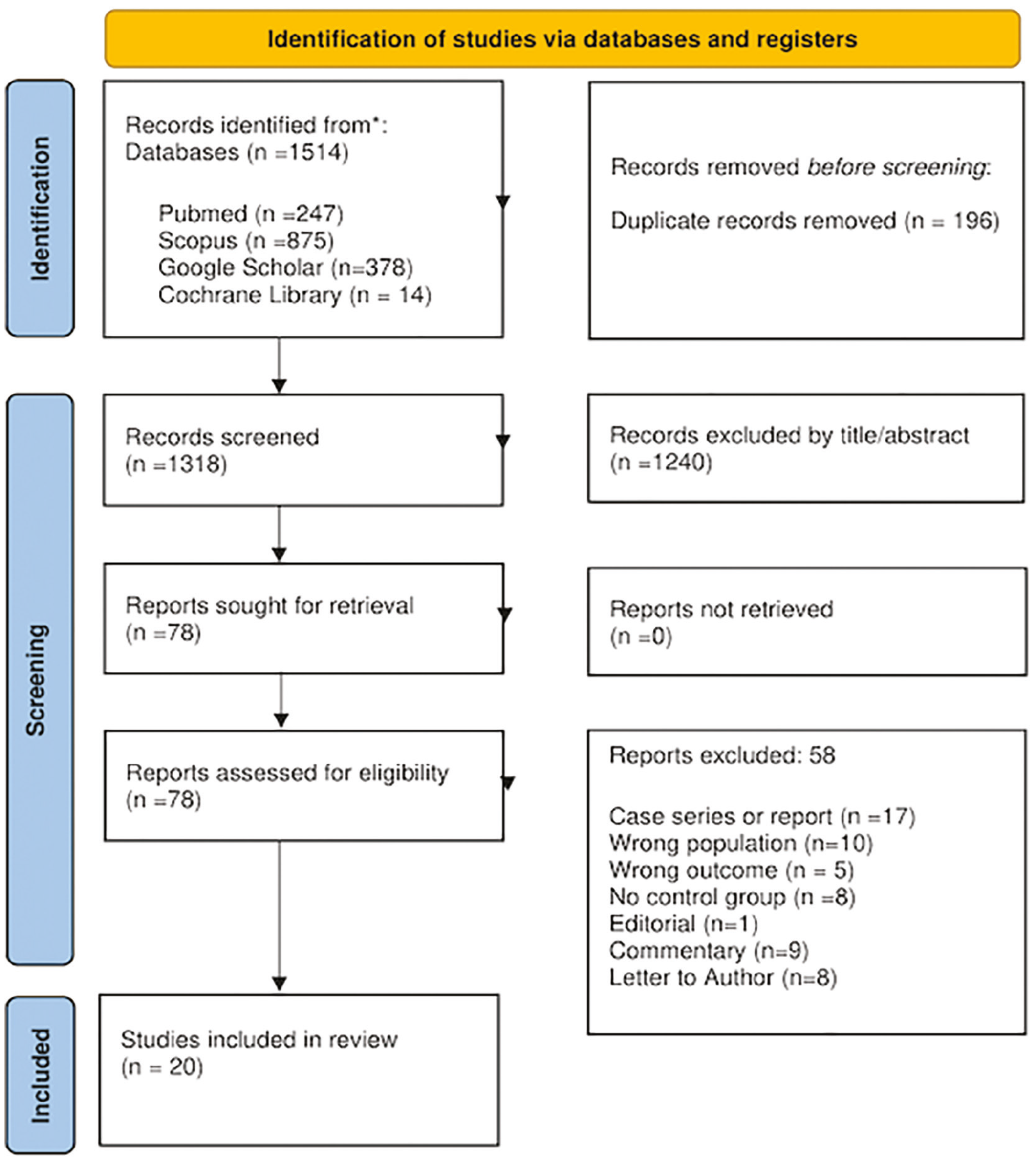
A total of 1,514 records were identified through database searching, of which 20 studies met the inclusion criteria and were incorporated into the final analysis (). The included evidence comprised 8 systematic reviews and meta-analyses (-), 2 RCTs (, ), and 10 observational cohort studies (-).
The methodological quality of the eight included systematic reviews was appraised using the AMSTAR 2 tool across 16 items and seven critical domains (). All eight reviews were rated as “Low” confidence, each carrying exactly one critical domain flaw. At the item level, full compliance (100%) was achieved for duplicate study selection (Item 5), adequate study description (Item 8), explanation of heterogeneity (Item 14), and conflict-of-interest disclosure (Item 16). Conversely, reporting of funding sources for included primary studies (Item 10), a non-critical domain, was absent across all reviews. Protocol pre-registration (Item 2), a critical domain, was met in only two reviews (, ), while the remaining six provided no evidence of a prospectively registered protocol. Excluded study lists with justifications (Item 7) were partially reported across all nine data columns, with no review achieving full compliance. Publication bias investigation (Item 15) was fully addressed in three reviews performing quantitative synthesis (, , ), partially met in two (, ), not met in one (), and not applicable in two reviews that did not perform meta-analysis. Overall, while the included systematic reviews satisfied core procedural criteria, notably dual-reviewer processes and risk-of-bias tool application, persistent deficiencies in protocol registration, publication bias assessment, and funding transparency substantially limit confidence in the available synthesized evidence.
The risk of bias of the two included controlled trials was evaluated using the revised cochrane risk of bias tool (RoB 2) across five domains (). The RCT () (n=48) was rated as raising some concerns overall, driven by limitations in blinding of intervention delivery and outcome assessment (D2), a challenge inherent to surgical trials. The controlled clinical trial () (n=24) was rated as high-risk overall, with high-risk identified for the randomization process (D1) and selection of the reported result (D5), and some concerns for the remaining domains (D2-D4).
The methodological quality of the 10 included observational studies was assessed using the ROBINS-I tool, with full domain-level results reported in . Two studies were rated as low-risk of bias (, ), six as moderate risk (, , , , , ), and two as serious risk (, ). Moderate ratings predominantly reflected residual confounding inherent to non-randomized designs. Serious risk classifications were attributable to substantial selection bias and inadequate control of confounding variables. No study was rated as critical risk.
Comparative efficacy and complication profiles of labiaplasty techniques
Recommendation grade: D/evidence level: 3
1. No single labiaplasty technique demonstrated superiority across all outcome domains. Surgeons should select the operative approach based on individual patient anatomy, degree of labial hypertrophy, and their own procedural competence rather than on satisfaction data alone, as pooled satisfaction rates exceed 93% across all established techniques and do not discriminate between approaches.
2. When wedge resection is planned, surgeons may consider modification with preservation of the central blood vessels and neural supply, as published data indicate an approximately 50% reduction in dehiscence incidence without a measurable effect on patient satisfaction.
Laser-assisted labiaplasty is associated with significantly lower rates of hematoma, postoperative swelling, and bleeding compared with scalpel-based resection at equivalent satisfaction outcomes and may be offered where appropriate expertise and equipment are available.
Two systematic reviews and meta-analyses provided comparative data on surgical techniques, satisfaction rates, and complication profiles across the principal approaches to labia minoraplasty. A PRISMA-compliant meta-analysis of 46 studies encompassing 3,804 patients () reported an overall pooled satisfaction rate of 99% [95% confidence interval (CI): 97-99%; I2=63.09%], with subgroup rates ranging from 93% for composite reduction to 100% for de-epithelialization, laser-assisted, and W-shape resection. Complication incidences were generally low, though technique-specific differences were observed: wound dehiscence was highest for laser-assisted labiaplasty (5%; 95% CI: 2-8%) and wedge resection (3%; 95% CI: 1-5%), while W-shape resection carried the highest pooled rates of hematoma formation (8%; 95% CI: <1-23%) and postoperative bleeding (2%; 95% CI: <1-15%). Revision surgery was required in 4.44% of cases, with dehiscence and aesthetic concerns constituting the most frequent indications.
A PROSPERO-registered meta-analysis of 86 eligible studies with quantitative data available from 53 (n=3,954) () corroborated the overall high satisfaction profile across all methods (pooled proportion 0.94; 95% CI: 0.93-0.95; I2=20%), with deepithelialization yielding the highest subgroup proportion (0.97; 95% CI: 0.85-0.99). Technique-specific complication differences were more granular in this analysis: wedge resection carried the second highest dehiscence incidence (0.084; 95% CI: 0.054-0.128), which was reduced by approximately 50% when performed with preservation of the central blood vessels and neural supply (0.042; 95% CI: 0.008-0.188); composite reduction showed the highest swelling incidence (0.131; 95% CI: 0.019-0.541). Comparison of surgical tools revealed that laser was associated with significantly lower rates of hematoma, swelling, and bleeding relative to the scalpel, with no significant difference in patient satisfaction between the two modalities (p=0.345). Across both reviews (, ), no single technique demonstrated superiority across all outcome domains; individualized technique selection based on patient anatomy, the degree of hypertrophy, and surgeon expertise was identified as the principal determinant of optimal outcomes.
Body and genital self-image
Recommendation grade: B/evidence level: 2+
1. Labiaplasty is associated with significant and reproducible improvements in genital self-image across all surgical techniques, with gains demonstrable as early as three months postoperatively and sustained at long-term follow-up. Patients should be counseled accordingly, and unrealistic expectations regarding the magnitude or permanence of body image gains should be specifically addressed during preoperative consultation.
2. The genital appearance satisfaction (GAS) scale and the cosmetic procedure screening scale for labiaplasty should be administered at baseline and at postoperative follow-up visits as standard instruments for outcome monitoring and for identifying candidates who warrant psychological referral.
Preoperative psychological distress and the absence of a current romantic relationship are independently associated with reduced postoperative satisfaction and should be explicitly weighed in the patient selection process.
A systematic review and meta-analysis pooling data from five study groups () reported a substantial mean GAS improvement relative to the instrument’s full range (p<0.001; I2=0.0%). A PRISMA 2020-compliant systematic review and meta-analysis of 11 studies published between 2015 and 2025 () found that FGSIS gains appeared sustained in cohorts with longer follow-up, though the overall certainty of evidence was rated low owing to single-arm observational designs and publication bias concerns. A randomized-sampling cross-sectional study () reported that women who had undergone labiaplasty or multiple procedures scored significantly higher on both genital self-image and body appreciation measures than surgery-seeking candidates and controls.
In the only Level 1 trial to date, a RCT () comparing wedge versus linear labiaplasty documented significant six-month improvements in both FGSIS and BDD-SS scores, without a significant between-technique difference. A prospective case-controlled cohort study () observed that preoperatively dysphoric body dysmorphic scores returned to control-group levels by 12 and 24 months, while genital self-image scores at 24 months significantly exceeded both baseline and control-group entry values. A prospective case-comparison study () found that the majority of patients met criteria for reliable and clinically significant GAS improvement at 3 months, with most maintaining this at long-term follow-up; notably, the majority of patients who fulfilled body dysmorphic disorder (BDD) diagnostic criteria preoperatively no longer did so at 3 months, whereas general body image scores showed only a non-significant trend toward improvement. A prospective controlled study () confirmed a large reduction in genital appearance dissatisfaction and identified preoperative psychological distress and the absence of a romantic partner as independent negative predictors of satisfaction, while general psychological well-being, self-esteem, and relationship quality remained unchanged. A retrospective comparative study () reported significant GAS improvement in both the modified and traditional wedge groups at six months, with no significant between-technique difference.
Across designs and instruments, postoperative gains in genital self-image are a reproducible finding, independent of surgical technique. The evidence base is, however, constrained by the predominance of uncontrolled pre-post designs and relatively short follow-up periods; prospective controlled studies incorporating standardized patient-reported outcome measures and follow-up of at least 12 months remain a research priority. Therefore, while a single RCT () provides Level 1 evidence, the body of evidence as a whole is more accurately characterized as Level 2+, given the predominance of single-arm and uncontrolled observational designs; thegradeB recommendation therefore reflects extrapolation from this Level 1 trial rather than a directly applicable, consistent Level 1+ body of evidence.
Postoperative sexual function after labiaplasty and female genital cosmetic surgery
Recommendation grade: C/evidence level: 1-
1. Labiaplasty is associated with consistent postoperative improvements in sexual function, with the most clinically meaningful gains observed in the pain and satisfaction domains. Patients may be informed of these expected benefits as part of shared decision-making; however, definitive prognostic assurances regarding long-term sexual function should not be offered, as available evidence is limited to predominantly uncontrolled designs with follow-up periods rarely exceeding six months.
2. Residual labial width exceeding 1 cm should be preserved where anatomically feasible, as greater residual tissue is associated with a larger magnitude of postoperative sexual function improvement.
The first systematic review and meta-analysis specifically focused on sexual function after labiaplasty () pooled data from six FSFI-based studies (8 groups, n=359) and reported an 18.8% improvement in the FSFI total score (95% CI 14.57-23.08; p<0.001; I2=97.8%), with a random-effects model employed owing to high heterogeneity. A PRISMA 2020-compliant systematic review and meta-analysis of 11 studies published between 2015 and 2025 () found a pooled standardized mean difference of 0.52 (95% CI 0.38-0.65), corresponding to a moderate improvement in sexual function; the largest domain-level gains were observed in pain and satisfaction, consistent with reduced dyspareunia and enhanced sexual comfort as key postoperative drivers. The overall certainty of evidence was rated very low under GRADE, primarily due to uncontrolled single-arm designs, suspected publication bias, and predominantly short follow-up periods.
A randomized-sampling cross-sectional study of 200 women across five clinical centers () found that women who had undergone labiaplasty scored significantly higher on the FSFI than surgery-seeking candidates (21.36 vs. 18.41; p=0.04), and women who had undergone multi-procedure FGCS likewise outperformed their surgery-seeking counterparts (23.02 vs. 18.02; p<0.001), indicating that completed surgery is associated with meaningfully better sexual function relative to the preoperative state. In the only controlled clinical trial in this domain (), 24 sexually active women were randomized to immediate labiaplasty or a wait-listed control condition; statistically significant improvements in the pain (p=0.044) and enjoyment (p=0.044) domains of the female sexual function questionnaire were documented at three months, though between-group differences did not reach significance at six months, likely reflecting limited statistical power. A retrospective comparative study of 150 women followed for 24 months after linear excision labiaplasty () reported significant FSFI improvements in both the wider-margin (Group 1: 17.00 to 30.36; +78.6%; p<0.001) and narrower-margin (Group 2: 17.30 to 24.62; +42.3%; p<0.001) groups, with the magnitude of improvement favoring preservation of a residual labial width exceeding 1 cm.
Across designs and instruments, postoperative improvements in sexual function are a consistent finding, with the largest and most durable gains concentrated in the pain and satisfaction domains. The evidence base is, however, constrained by the predominance of uncontrolled pre-post designs, high between-study heterogeneity, and follow-up periods rarely exceeding six months; RCTs with standardized FSFI assessment and follow-up of at least 12 months remain a critical research priority.
Psychosocial determinants and motivational profiles of women seeking labiaplasty
Recommendation grade: C/evidence level: 2+
1. All women requesting labiaplasty should undergo structured preoperative motivational assessment that addresses functional, aesthetic, psychological, and relational domains. Unidimensional assessment is insufficient, as the majority of candidates express concerns spanning more than one category simultaneously.
2. All candidates should be screened for BDD using a validated instrument before surgical planning is initiated. Women who meet diagnostic criteria require formal psychiatric evaluation prior to any operative intervention; it should be noted that BDD prevalence reaches 18.2% in controlled clinical samples and that all affected individuals in published series presented with objectively normal labial morphology.
3. Wide physiological variation in labial morphology should be communicated to all candidates as a routine and non-discretionary component of the initial consultation. A patient’s stated awareness of her own anatomical normality does not obviate this counseling, as anatomical knowledge does not preclude appearance-driven distress sufficient to motivate surgical pursuit.
Across two systematic reviews and three cross-sectional controlled comparisons, the motivational architecture underlying labiaplasty-seeking behavior was consistently heterogeneous, encompassing functional, aesthetic, psychological, and relational domains. A PRISMA-compliant systematic review (k=16, n=1,143) () identified functional complaints as the most prevalent motivational category (52.2%), followed by appearance-related concerns (46.3%), psychological factors (26.9%), sexual reasons (20.5%), and infection-related complaints (18.3%); within the sexual domain, partner criticism (44.4%) and dyspareunia (35.8%) were most frequently reported. A PROSPERO-registered systematic review (k=3, n=308) () yielded partially discrepant findings contingent on study design: aesthetic motivations predominated in both retrospective chart reviews (68-87%), whereas the qualitative component demonstrated that functional impairment consistently ranked above aesthetic dissatisfaction when the two concerns co-existed. Of particular clinical significance, 85.7% of the qualitative subsample acknowledged that their labial dimensions fell within the normative range prior to seeking surgery, and 71.4% attributed their appearance-related distress to negative comments received from partners, family members, or clinicians.
Among the primary cross-sectional studies, a controlled comparison of 125 women () reported aesthetic (70.8%), functional (62.5%), and sexual (37.5%) motivations among labiaplasty candidates, with 50.0% endorsing all three domains concurrently. Relative to controls, the labiaplasty group demonstrated markedly greater genital appearance dissatisfaction (GAS scale, Cohen’s d=3.09), lower sexual satisfaction, and reduced body image quality of life, in the absence of significant between-group differences in anxiety or depression symptom severity. BDD diagnostic criteria were fulfilled by 18.2% of labiaplasty candidates, all presenting with objectively normal labial morphology and a mean duration of appearance concern of 13.4 years. The companion investigation of developmental risk factors within the same cohort () established that 38.6% of labiaplasty candidates recalled genital-specific negative comments, predominantly attributed to ex-partners (64.3%), in contrast to 5.1% of controls (chi2 =13.15, p<0.0001); women reporting genital-directed teasing exhibited significantly greater genital appearance dissatisfaction relative to non-teased counterparts. No between-group differences were observed for childhood maltreatment, disgust sensitivity, or general appearance-related teasing, identifying genital-specific negative social feedback as a discrete vulnerability factor independent of the broader psychopathological risk profile. Procedural information was acquired predominantly through media channels (81.8%), and 84.8% of candidates characterized the surgical decision as entirely autonomous.
A controlled cross-sectional comparison of 65 women () corroborated the multidomain motivational structure, with 77.1% of candidates endorsing concerns spanning more than one thematic category, alongside significantly greater internalization of idealized genital appearance norms (p=0.010) and lower overall life satisfaction (p=0.027) relative to controls; psychological distress indices and self-esteem scores, however, did not differ significantly between groups. In a randomized-sampling cross-sectional study of 200 women (), genital appearance dissatisfaction constituted the leading motivational factor among isolated labiaplasty candidates, whereas partner satisfaction was the primary driver among women pursuing multiple concurrent procedures; online media represented the dominant informational source (53%), with the sexual partner and treating physician identified as the most influential determinants of the final surgical decision (31% and 30%, respectively).
The role of sexual partner influence in women’s decision to seek labiaplasty
Recommendation grade: C/evidence level: 2+
1. Understanding a patient’s motivation for labiaplasty requires careful and sensitive exploration to ensure her autonomy and to rule out the possibility of coercion or exploitation by a partner or family member. Overt partner coercion, partner-attributed negative genital feedback, and anticipatory fear of partner disapproval should be evaluated as distinct clinical constructs rather than collapsed into a single variable, as each carries different implications for patient vulnerability and surgical appropriateness.
2. Partner-attributed negative comments regarding genital appearance are recalled by approximately one-third of labiaplasty candidates and constitute a discrete vulnerability that warrants dedicated exploration during preoperative evaluation, independent of general psychological screening. Where assessment indicates that the decision to pursue surgery is substantially driven by relational pressure or the desire to conform to a partner’s preferences rather than the patient’s own distress, surgery should be deferred pending formal psychological evaluation.
3. Confirmation that the surgical decision is autonomous and free from external coercion should be documented in the medical record as a mandatory element of the informed consent process.
The influence of sexual partners on women’s decisions to seek labiaplasty was examined across one systematic review with meta-analysis and three cross-sectional controlled comparisons, encompassing a combined primary sample of 390 participants and a meta-analytic pool of 321 participants drawn from six studies. A PRISMA-compliant systematic review and meta-analysis of 12 studies totaling 962 participants () categorized partner influence along three operationally distinct dimensions: direct influence on the surgical decision, surgery conducted at the partner’s urging or request, and concerns related to the partner’s reaction or sexual pleasure. The weighted average of direct partner influence on the surgical decision was 6.9%, and 5.9% of women reported having undergone labiaplasty specifically at a partner’s urging or request, indicating that overt partner coercion constitutes a numerically minor pathway to surgery. The meta-analysis of 6 studies (n=321) examining the role of partner-attributed negative comments yielded a pooled prevalence of 36.7% (95% CI: 24.3-49.1; p<0.001), though substantial heterogeneity was observed (I2=83.3%), precluding firm quantitative conclusions. Concerns related to partner reaction or perceived sexual attractiveness to the partner were reported by a weighted average of 27.2% of women across included studies, with individual estimates ranging from 1% to 64% depending on the operationalization used, a disparity that underscores the measurement inconsistencies pervading this literature.
These findings converge with and are further contextualized by the primary cross-sectional studies. A controlled comparison of 125 women () established that 38.6% of labiaplasty candidates recalled genital-specific negative comments, compared to 5.1% of controls (chi2 =13.15, p<0.0001), with ex-partners constituting the source in 64.3% of recalled incidents; women who reported such comments demonstrated significantly greater genital appearance dissatisfaction than those who did not (p<0.05). Critically, no between-group differences were observed for childhood maltreatment, disgust sensitivity, or general appearance teasing, positioning genital-directed negative feedback as a discrete and contextually specific vulnerability rather than a marker of generalized body image pathology. In the same cohort () (n=125), the perceived abnormality of the labia as disclosed to a sexual partner was significantly higher in the labiaplasty group relative to controls (median 5 vs. 0; p<0.001), suggesting that anticipated or experienced partner appraisal is a salient component of genital self-perception in this population. A controlled cross-sectional comparison of 65 women () found that the frequency of negative comments from current romantic partners did not differ significantly between groups (p=0.407), though a significantly lower proportion of labiaplasty candidates were involved in a romantic relationship at the time of assessment (60.0% vs. 83.3%; p=0.039), a pattern consistent with the hypothesis that avoidance of intimate relationships may itself reflect concerns about future partner reactions to genital appearance. Across studies (, , ), 81.8-84.8% of labiaplasty candidates described the surgical decision as self-initiated, with 84.8% endorsing the maximum autonomy rating on the relevant scale.
Discussion
The results of this systematic review and Delphi consensus process establish that aesthetic labiaplasty produces consistent, reproducible improvements in genital self-image and meaningful gains in sexual function, generating grade B and grade C recommendations for these outcomes, respectively. These findings align with and extend prior meta-analytic data (-), confirming that postoperative benefit is independent of surgical technique and demonstrable across diverse study designs. At the same time, the preponderance of uncontrolled observational evidence, the heterogeneous motivational landscape among candidates, and the substantial prevalence of comorbid psychopathology in this population (, , ) collectively preclude interpreting high satisfaction rates as justification for unrestricted surgical access. Patient selection, structured psychological screening, and individualized counseling remain foundational determinants of surgical appropriateness that cannot be subordinated to procedural demand alone.
A recurrent challenge in this field is the tendency to treat patient-reported dissatisfaction as sufficient indication for surgery in the absence of pathology, without systematic assessment of the psychological context in which that dissatisfaction arises. Across the studies reviewed, a majority of labiaplasty candidates presented with labial dimensions within the published normative range (, ). This observation is corroborated by population-based normative data demonstrating that mean labia minora length exceeds the widely cited 30 to 40 mm hypertrophy threshold in more than half of unselected adult women (). The operationalization of normal anatomical variation as a surgical target, driven in part by direct-to-consumer marketing and the normalization of a prepubescent vulvar appearance in online media, constitutes one of the central ethical concerns in aesthetic gynecology. The ACOG Committee Opinion 795 formally recognizes this risk, noting that characterizing normal anatomical variation as necessitating medical intervention exposes otherwise healthy women to unnecessary procedures with the potential for serious harm (). Pre-operative communication of the full range of normal genital morphology is therefore an obligatory component of the clinical encounter and a prerequisite to any discussion of surgical planning.
The finding that 18.2% of labiaplasty candidates in controlled clinical studies fulfilled diagnostic criteria for BDD represents a prevalence markedly higher than that reported for general cosmetic surgery populations in systematic reviews and meta-analyses, where pooled estimates range from 15% to 19.2% (, ). BDD is characterized by preoccupation with a perceived or minimally observable physical defect accompanied by significant distress and repetitive checking or concealment behaviors, as codified in DSM-5. The clinical significance of this finding extends beyond frequency: all affected individuals in the primary studies reviewed presented with objectively normal labial anatomy (), and the mean duration of appearance preoccupation exceeded thirteen years, indicating that surgical correction of an anatomically normal structure in this subgroup would be unlikely to resolve the underlying psychopathology. Several prospective series have documented that cosmetic surgery performed in patients with unrecognized BDD fails to produce sustained symptomatic relief and may precipitate escalating reoperation requests or displacement of appearance concern to adjacent anatomical regions (, ). For these reasons, pre-operative screening with a validated instrument, such as the COPS-L or the BDD Symptom Scale (BDD-SS), followed by formal psychiatric evaluation in screen-positive candidates, must be treated as a mandatory safeguard rather than an optional adjunct to clinical assessment. No operative decision should proceed in a candidate who meets BDD diagnostic criteria prior to psychiatric clearance.
The meta-analytic finding that 36.7% of labiaplasty candidates recalled partner-attributed negative comments regarding genital appearance, compared with fewer than 6% of controls, establishes partner-related social feedback as a discrete and clinically significant vulnerability in this population (). Although direct partner coercion accounts for a numerically small proportion of surgical decisions (6.9%) (), the broader influence of partner appraisal, anticipated negative evaluation, and internalized appearance standards derived from intimate relationships cannot be dismissed. Of particular note, 71.4% of the qualitative subsample in one included review attributed genital-related distress directly to comments from partners, family members, or clinicians (), and a substantially lower proportion of labiaplasty candidates were in an active romantic relationship at the time of assessment, a pattern potentially consistent with relational avoidance secondary to appearance concerns. Online media constituted the dominant source of procedural information in 53% to 81.8% of candidates across studies (, ), reflecting the extent to which appearance dissatisfaction in this group is externally generated rather than intrinsically motivated. These observations collectively reinforce the recommendation that motivational assessment must address relational context and systematically distinguish autonomous patient preference from appearance distress driven by social or partner-mediated pressure. Formal documentation of decisional autonomy should be incorporated into the informed consent record as a standard requirement.
The motivational architecture underlying labiaplasty-seeking behavior is multidimensional and cannot be reduced to a single causal domain. Across the included systematic reviews, functional complaints constituted the most frequently reported single motivational category (52.2%), followed by aesthetic dissatisfaction (46.3%), psychological factors (26.9%), and sexual reasons (20.5%) (). However, these proportions require careful clinical interpretation: in studies where functional and aesthetic concerns co-existed, functional impairment consistently emerged as the primary stated justification in qualitative analyses, whereas aesthetic dissatisfaction predominantly drove help-seeking among women who acknowledged their labial dimensions fell within the normative range (). A controlled comparison of 125 candidates documented that aesthetic (70.8%), functional (62.5%), and sexual (37.5%) motivations co-existed concurrently in 50.0% of women, a degree of overlap that cannot be resolved through unidimensional pre-operative questioning alone (). The influence of external informational sources adds further complexity: in a cross-sectional study of 71 labiaplasty-seeking women, 47.9% reported media influence on their perception of genital appearance, and pornography consumption in the preceding month was significantly associated with lower genital self-image and self-esteem (). This is consistent with systematic evidence that online content promoting female genital cosmetic surgery regularly pathologizes normal vulvar variation and frames a prepubescent appearance as an aesthetic standard (). For clinicians, this motivational complexity has direct practical implications: pre-operative assessment must systematically address functional, aesthetic, psychological, and relational domains in parallel, and must explicitly explore the informational pathways through which the patient arrived at the surgical decision. Failure to do so risks proceeding with surgery in candidates whose motivation is primarily externally constructed rather than arising from personal distress.
Aesthetic labiaplasty in women below the age of 18 years raises distinct ethical, legal, and developmental considerations that fall outside the scope of this guideline but warrant explicit acknowledgment. Labial anatomy undergoes continued maturation through adolescence, with labial width and length increasing throughout puberty and individual developmental trajectories varying considerably (). Dimensional asymmetry or apparent prominence that generates concern in younger patients may therefore resolve spontaneously without intervention. Legal frameworks in several jurisdictions impose significant restrictions on genital surgical procedures in minors (). The ethical guidance of major gynecological societies, including ACOG and the Royal College of Obstetricians and Gynaecologists, restricts aesthetic labiaplasty in this age group to cases of significant congenital malformation or persistent, clinically confirmed functional symptoms directly attributable to labial anatomy (, ). Any consideration of surgery below the age of 18 must be evaluated within a multidisciplinary framework that incorporates psychological assessment, verified parental or guardian involvement, and a particularly rigorous informed consent process. The standard of obligatory counseling regarding normal anatomical variation applies with even greater weight in this context.
At the operative level, the absence of technique-specific superiority across satisfaction and complication outcomes supports an individualized approach to surgical planning, with technique selection governed by patient anatomy, degree and pattern of hypertrophy, vascular anatomy, and surgeon proficiency (, ). The approximately 50% reduction in dehiscence risk associated with central pedicle preservation during wedge resection, and the significantly lower rates of hematoma and postoperative swelling documented with laser-assisted excision relative to conventional scalpel-based approaches (, ), represent evidence-informed refinements that merit consideration in operative planning without mandating a universal technique. At the broader clinical level, the convergent weight of evidence reviewed in this guideline supports a model in which aesthetic labiaplasty is offered selectively within a structured evaluation pathway encompassing motivational profiling, validated psychological screening (, ), normative counseling (, ), and documented informed consent, rather than as a commodity-based service available on patient request alone. The field will ultimately be best served not by debating whether labiaplasty produces benefit in appropriately selected patients, as the evidence reviewed here confirms that it does, but by rigorously defining the selection criteria, institutional safeguards, and outcome standards that distinguish ethical surgical practice from indiscriminate provision.
The present guideline has several limitations that should be acknowledged when interpreting its recommendations. The majority of recommendations carry low certainty of evidence, reflecting the methodological characteristics of the underlying literature: the preponderance of uncontrolled single-arm pre-post designs, the predominance of retrospective cohort studies with moderate to serious risk of bias under the ROBINS-I framework, and the absence of adequately powered RCTs across most clinical domains. Of the two controlled trials included in this synthesis, one was rated as high-risk of bias overall, and the sole RCT raised some concerns predominantly attributable to the inherent impossibility of blinding surgeons and outcome assessors in surgical research. Only two of eight included systematic reviews had pre-registered protocols, and publication bias was inadequately addressed in the majority, further limiting confidence in pooled estimates. These structural limitations of the evidence base are not unique to this guideline but are representative of the field as a whole, and they underline the critical need for prospective, controlled, and adequately powered research to consolidate and refine future recommendations.
The expert consensus process, while rigorous in design, is subject to additional limitations. Participation in the Delphi panel was restricted to clinicians affiliated with PETKOZ who had independently performed a minimum of 50 labiaplasty procedures. Although this eligibility threshold was applied to ensure that recommendations reflect meaningful procedural expertise, it may limit the generalizability of consensus-derived statements to surgeons at earlier stages of their learning curve, to institutions with lower labiaplasty case volumes, and to settings in which multidisciplinary psychological and pelvic floor services are not routinely available. Furthermore, the panel was composed exclusively of Turkish specialists, and the recommendations may not fully account for differences in patient demographics, genital appearance norms, healthcare infrastructure, reimbursement structures, and cultural attitudes toward genital cosmetic surgery in other clinical environments.
Recommendations for future research
Despite substantial recent advances in the evidence base for elective female genital cosmetic surgery, a number of clinically important questions remain inadequately addressed by existing research. The guideline development group has identified the following priority areas for future investigation:
1) The design and conduct of adequately powered, prospective RCTs comparing labiaplasty against structured psychological intervention (including cognitive behavioral therapy and body image-focused approaches) or watchful waiting in women presenting with clinically validated functional complaints, using standardized patient-reported outcome measures, principally the FGSIS and FSFI, with a minimum follow-up period of 12 months.
2) The development and psychometric validation of a composite labiaplasty indication score integrating anatomical measurement, symptom severity, genital self-image, and psychosocial burden, to standardize patient selection criteria and facilitate cross-study comparability.
3) Prospective evaluation of the long-term durability of postoperative improvements in genital self-image and sexual function, with standardized assessments at one, two, and five years postoperatively, to characterize the natural history of outcomes and identify predictors of satisfaction versus dissatisfaction at each time point.
4) Systematic investigation of the prevalence, clinical correlates, and optimal management of BDD in labiaplasty-seeking populations outside controlled research settings, including the development and validation of a brief, clinician-administered BDD screening tool specifically calibrated for a cosmetic gynecology consultation.
5) Comparative effectiveness studies evaluating the impact of different pre-operative psychological screening and counseling protocols on surgical decision rates, postoperative satisfaction, and complication rates, including cost-effectiveness analyses of mandatory psychologist referral versus structured gynecologist-led screening.
6) Rigorous evaluation of the safety, efficacy, and appropriate indications of laser-assisted labiaplasty relative to conventional scalpel-based techniques across diverse institutional settings, incorporating objective wound healing assessments, validated pain scales, and patient-reported satisfaction at standardized follow-up intervals.
7) Investigation of the role of residual labial tissue volume and surgical margin width on long-term anatomical, functional, and sexual outcomes, to establish evidence-based intraoperative targets for tissue preservation and refine existing classification systems for labial protrusion and hypertrophy.
8) Population-based normative studies of external genital anatomy in Turkish adult women across age groups and reproductive stages, to provide culturally and ethnically appropriate reference data for patient counseling and to replace reliance on non-representative European normative datasets in the local clinical context.
9) Prospective multicenter registry studies incorporating standardized pre-operative anatomical documentation, validated motivational assessment, psychological screening, structured intraoperative data collection, and long-term follow-up to characterize real-world outcomes and complication rates across diverse surgical settings and technique profiles.
10) Evaluation of the clinical outcomes and ethical implications of elective labiaplasty in adolescent populations, including delineation of appropriate age-specific indication thresholds, the natural history of adolescent genital appearance dissatisfaction, and the impact of delayed versus early surgical intervention on long-term psychosocial well-being.
Further studies addressing these priority areas are needed to elevate the quality and certainty of evidence underpinning future iterations of this guideline, to improve patient selection and outcome prediction, to reduce unexplained practice variation, and to ensure that clinical recommendations reflect the best available evidence rather than expert opinion alone.
Conclusion
Gynecologists and pelvic floor surgeons may encounter requests for elective labiaplasty from adult women presenting with aesthetic, psychosocial, or quality-of-life concerns. For clinicians choosing to provide this service, structured patient assessment, pre-operative psychological screening including mandatory evaluation for BDD, counseling on the full range of normal labial anatomy, shared decision making, and comprehensive informed consent are not optional adjuncts but essential prerequisites to any operative intervention. Labiaplasty confers reproducible improvements in genital self-image and meaningful gains in sexual function in appropriately selected patients. However, the high prevalence of BDD in this population (18.2%), the predominance of candidates with anatomy within the normative range, and the multidimensional, externally influenced motivational landscape collectively establish that this procedure must be offered selectively rather than on demand. Patients should be made aware that elective labiaplasty performed in the absence of a primary clinical indication remains a procedure with an evolving evidence base, and that outcomes are substantially determined by the rigor of pre-operative evaluation rather than by surgical technique alone.
Plans for updating
The topics identified in the recommendations for future research that could not be adequately addressed within the scope of the present guideline will be considered for inclusion in future guideline documents and expert practice opinion papers to be developed by the PETKOZ Guidelines Committee. Given the expectation of new evidence from ongoing RCTs, prospective cohort studies, and emerging national registry data in the field of elective female genital cosmetic surgery, this guideline is planned to be formally updated within two years of its initial publication date. An interim literature review will be conducted on the first anniversary of publication to identify any newly published high-quality studies that may warrant expedited modification of specific recommendations prior to the scheduled full update. The updated guideline will be subject to the same structured evidence synthesis, risk-of-bias appraisal, and expert consensus methodology employed in the present document. Clinicians are encouraged to consult the PETKOZ Association website (https://petkoz.org) for announcements regarding updated recommendations and supplementary guidance documents as they become available.
Footnotes
Author Contributions: Concept: O.D., M.Y., Design: E.Ç., Data Collection or Processing: O.D., M.Y., A.E.K., E.Ç., P.K., E.C., C.A., E.A., K.B., P.B.İ., S.B., S.B.K., Y.C., T.D., M.E., S.E., G.G., S.H.K., Ü.K.D., O.K., C.K., Ö.L., A.M., N.P., H.Ş., M.B.Ş., A.S., Ö.T., E.U., Analysis or Interpretation: O.D., M.Y., A.E.K., E.Ç., P.K., E.C., Writing: M.Y., P.K.
Conflict of Interest: No conflict of interest is declared by the authors.
Financial Disclosure: The authors declared that this study received no financial support.
References
Özer M, Mortimore I, Jansma EP, Mullender MG. Labiaplasty: motivation, techniques, and ethics. Nat Rev Urol. 2018; 15: 175-89.
Elective female genital cosmetic surgery: ACOG Committee opinion, Number 795. Obstet Gynecol. 2020; 135: e36-e42.
Goodman MP. Female genital cosmetic and plastic surgery: a review. J Sex Med. 2011; 8: 1813-25.
Hamori CA. Aesthetic surgery of the female genitalia: labiaplasty and beyond. Plast Reconstr Surg. 2014; 134: 661-73.
Shaw D, Allen L, Chan C, Kives S, Popadiuk C, Robertson D, et al. Guideline No. 423: female genital cosmetic surgery and procedures. J Obstet Gynaecol Can. 2022; 44: 204-14.
Wilkie G, Bartz D. Vaginal rejuvenation: a review of female genital cosmetic surgery. Obstet Gynecol Surv. 2018; 73: 287-92.
Desai SA, Kroumpouzos G, Sadick N. Vaginal rejuvenation: from scalpel to wands. Int J Womens Dermatol. 2019; 5: 79-84.
Schmidt CN, Rowen TS. Female genital self-image and modification. J Sex Med. 2021; 18: 1945-9.
Lloyd J, Crouch NS, Minto CL, Liao LM, Creighton SM. Female genital appearance: “normality” unfolds. BJOG. 2005; 112: 643-6.
Veale D, Gledhill LJ, Christodoulou P, Hodsoll J. Body dysmorphic disorder in different settings: a systematic review and estimated weighted prevalence. Body Image. 2016; 18: 168-86.
Hasson F, Keeney S, McKenna H. Research guidelines for the Delphi survey technique. J Adv Nurs. 2000; 32: 1008-15.
Jones J, Hunter D. Consensus methods for medical and health services research. BMJ. 1995; 311: 376-80.
Sterne JA, Hernán MA, Reeves BC, Savović J, Berkman ND, Viswanathan M, et al. ROBINS-I: a tool for assessing risk of bias in non-randomised studies of interventions. BMJ. 2016; 355: i4919.
Higgins JP, Altman DG, Gøtzsche PC, Jüni P, Moher D, Oxman AD, et al. The Cochrane Collaboration’s tool for assessing risk of bias in randomised trials. BMJ. 2011; 343: d5928.
Shea BJ, Reeves BC, Wells G, Thuku M, Hamel C, Moran J, et al. AMSTAR 2: a critical appraisal tool for systematic reviews that include randomised or non-randomised studies of healthcare interventions, or both. BMJ. 2017; 358: j4008.
Escandón JM, Duarte-Bateman D, Bustos VP, Escandón L, Mantilla-Rivas E, Mascaro-Pankova A, et al. Maximizing safety and optimizing outcomes of labiaplasty: a systematic review and meta-analysis. Plast Reconstr Surg. 2022; 150: 776e-88e.
Géczi AM, Varga T, Vajna R, Pataki G, Meznerics FA, Ács N, et al. Comprehensive assessment of labiaplasty techniques and tools, satisfaction rates, and risk factors: a systematic review and meta-analysis. Aesthet Surg J. 2024; 44: NP798-NP808.
Alavi-Arjas F, Goodman MP, Simbar M, Majd HA, Sharp G, Nahidi F. The effect of female genital cosmetic and reconstructive procedures on body and genital self-image: a systematic review and meta-analysis. Aesthet Surg J. 2023; 43: 1161-73.
Zulfikaroglu E, Kurban D. Sexual function after female genital cosmetic surgery: a systematic review and meta-analysis. Eur J Obstet Gynecol Reprod Biol. 2026; 318: 114894.
Nahidi F, Goodman MP, Alavi-Arjas F, Simbar M, Majd HA, Rastegar F. Female sexual function after labiaplasty: a systematic review and meta-analysis. Aesthetic Plast Surg. 2026; 50: 447-60.
Alavi-Arjas F, Nahidi F, Simbar M, Majd HA, Rastegar F. The role of sexual partner in women’s seeking for labiaplasty: a systematic review and meta-analysis. J Sex Med. 2024; 21: 844-52.
Aulia I, Irmawati FP, Amani CA, Iranti A. Behind the decision: exploring motivations, and psychological and sexual outcomes of labiaplasty. Plast Reconstr Surg Glob Open. 2025; 13: e7051.
Ortega-Sánchez I, Lucha-López MO, Monti-Ballano S. Motivational factors for labiaplasty: a systematic review of medical research. J Clin Med. 2025; 14: 2686.
Minikowski GC, Veiga DF, Felix GAA, Pedroso JCM, Ferreira LM, Neto MS. Genital self-image and body dysmorphic symptoms in patients undergoing central wedge or linear labiaplasty: a clinical trial. Plast Reconstr Surg. 2025; 155: 53e-65e.
Turini T, Weck Roxo AC, Serra-Guimarães F, Abreu ML, de Castro CC, Aboudib JH, et al. The impact of labiaplasty on sexuality. Plast Reconstr Surg. 2018; 141: 87-92.
Goodman MP, Placik OJ, Matlock DL, Simopoulos AF, Dalton TA, Veale D, et al. Evaluation of body image and sexual satisfaction in women undergoing female genital plastic/cosmetic surgery. Aesthet Surg J. 2016; 36: 1048-57.
Sharp G, Tiggemann M, Mattiske J. Factors that influence the decision to undergo labiaplasty: media, relationships, and psychological well-being. Aesthet Surg J. 2016; 36: 469-78.
Veale D, Eshkevari E, Ellison N, Costa A, Robinson D, Kavouni A, et al. A comparison of risk factors for women seeking labiaplasty compared to those not seeking labiaplasty. Body Image. 2014; 11: 57-62.
Jiang X, Chen S, Qu S, Ma N, Wang W, Li Y, et al. A new modified labiaplasty combined with wedge de-epithelialization on the medial side and edge resection. Aesthetic Plast Surg. 2021; 45: 1869-76.
Dogan O, Ucar E, Yassa M. Does the surgical margin affect sexual function following linear labiaplasty technique? Aesthet Surg J. 2024; 44: NP271-NP8.
Nahidi F, Payne E, Alavi-Arjas F, Simbar M, Majd HA, Silverio SA. Influencing factors and satisfaction with body and genital image in women undergoing genital cosmetic surgery: a randomized, cross-sectional study. Aesthetic Plast Surg. 2026; 50: 2092-104.
Alavi-Arjas F, Nahidi F, Simbar M, Alavi Majd H, Payne E, Silverio SA. Comparison of sexual function, satisfaction, and assertiveness in genital cosmetic surgery groups: a randomized-sampling cross-sectional study. Aesthetic Plast Surg. 2025; 49: 1154-66.
Sharp G, Tiggemann M, Mattiske J. Psychological outcomes of labiaplasty: a prospective study. Plast Reconstr Surg. 2016; 138: 1202-9.
Veale D, Eshkevari E, Ellison N, Costa A, Robinson D, Kavouni A, et al. Psychological characteristics and motivation of women seeking labiaplasty. Psychol Med. 2014; 44: 555-66.
Veale D, Naismith I, Eshkevari E, Ellison N, Costa A, Robinson D, et al. Psychosexual outcome after labiaplasty: a prospective case-comparison study. Int Urogynecol J. 2014; 25: 831-9.
Ribeiro RVE. Prevalence of body dysmorphic disorder in plastic surgery and dermatology patients: a systematic review with meta-analysis. Aesthetic Plast Surg. 2017; 41: 964-70.
Salari N, Kazeminia M, Heydari M, Darvishi N, Ghasemi H, Shohaimi S, et al. Body dysmorphic disorder in individuals requesting cosmetic surgery: a systematic review and meta-analysis. J Plast Reconstr Aesthet Surg. 2022; 75: 2325-36.
Kreklau A, Vâz I, Oehme F, Strub F, Brechbühl R, Christmann C, et al. Measurements of a ‘normal vulva’ in women aged 15-84: a cross-sectional prospective single-centre study. BJOG. 2018; 125: 1656-61.
Phillips KA, Grant J, Siniscalchi J, Albertini RS. Surgical and nonpsychiatric medical treatment of patients with body dysmorphic disorder. Psychosomatics. 2001; 42: 504-10.
Crerand CE, Menard W, Phillips KA. Surgical and minimally invasive cosmetic procedures among persons with body dysmorphic disorder. Ann Plast Surg. 2010; 65: 11-6.
Dogan O, Yassa M. Major motivators and sociodemographic features of women undergoing labiaplasty. Aesthet Surg J. 2019; 39: NP517-NP27.
Casalino F, Moussaoui D, Brockmann C, Crofts V, Abdulcadir J, Yaron M. Vulvar developmental stages during puberty: a systematic review. J Pediatr Adolesc Gynecol. 2025; 38: 313-9.
Lawson AA, Strickland JL. Labial anatomy concerns in the adolescent: a review. J Pediatr Adolesc Gynecol. 2023; 36: 505-10.
Supplementary Materials
Supplementary Table 1
Download